Ray lives in Edmonton, Alberta, Canada. He's a writer and photographer. He's been editor of a number of haiku and Haibun journals. He enjoys wilderness hiking and canoeing. His collection "Landmarks: A Haibun Collection" is available on Amazon.
Welcome. My intent is to show examples and to discuss contemporary English-language haibun and haiga which necessitate also exploring haiku (haibun prose’s and haiga image’s little partner).
Haibun: A mix of Title, prose and haiku. Akin to short memoirs and personal essays. Typically non-fiction.
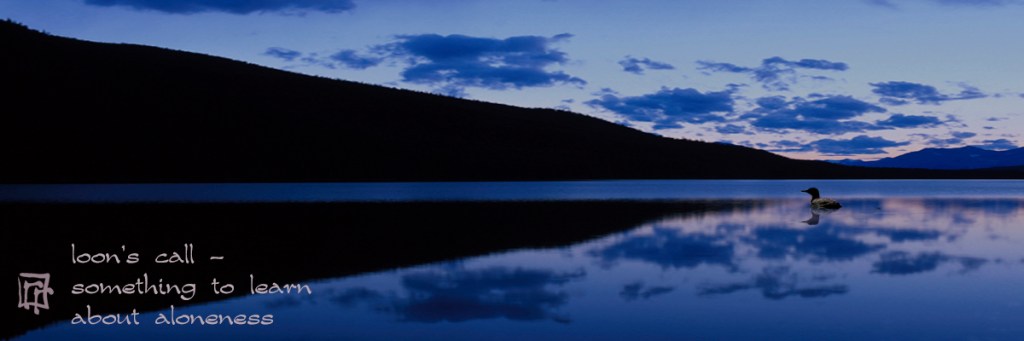
Haibun: A mix of image and haiku. Images including paintings of any type, photographs, digital art.
[other haiga themes along with examples by other haiga practitioners will be added from time to time]
About Haiga
As is the case with haiku and haibun, contemporary English-language haiga is only recently adapted from the early and contemporary Japanese forms to fit Western poetic and artistic sensibilities. The internet is rife with pronouncements, prescriptions and orthodoxies about the relationship of image and haiku. Does the haiku serve as a metaphor for the image, or does it jump-shift to form an oblique association with the image, or does it simply serve as a kind of caption for the image? And the usual arguments about the haiku itself are also are in abundance, e.g., whether the haiku should be able to stand on its own, sans image. For now, it’s likely that English-language western haiga practice will continue to evolve and gain in practitioners.
While the original Japanese haiga were usually a combination of monochrome (grey-scale) brush paintings with kanji-type characters and calligraphy for the poems. Contemporary haiga as shown in various publications such as Haigaonline employ paintings of various media, photographic images and digital artworks.
In short, as with any evolving form, one hopes for creative image-making and pleasing to the eye artwork along with poems that are poetic and stimulating to the mind.
Asian practitioners employed a “chop” – a symbol representing the author. If well done, the chop itself has some beauty and lends an association with the lengthy tradition of Asian art.
Hell isn’t merely paved with good intentions: it’s walled and roofed with them. Yes, and furnished too. ~ Aldous Huxley
We’re dining on ginger beef and cod in black bean sauce, flavored with catch-up chat. My friend Kathy, leans toward me and says, “I think you’re just about to have an important birthday. Yes?”
I tell her my age and, excited now, she says: “I thought so. Why don’t I organize a party to celebrate your milestone?”
Milestone? The word was coined for the stone obelisks placed by those great builders, the Romans, to mark distances along the many roads branching out from Rome.
age-worn stone
the emperor’s name
unreadable
“If you set up a milestone gathering, have a good time and say hello to everyone for me,” I reply.
“What – you wouldn’t want to celebrate with your friends?” she asks.
“It’s the idea that I’ve done something extraordinary to reach my present age, like conquering a new territory, and thus deserve a tribute where I parade my army, plunder, and slaves through streets lined with cheering citizens. A milestone party would invite congratulatory comments like ‘You’ve made it to a magic age,” lead to questions like ‘What’s on your bucket list – going sky diving?”
“Do you mean you think they’d not be sincere?” she asks.
“When I look at someone my age, even when they’re still mentally and physically active, I feel a sadness about their diminishment. On my last hiking trip, a middle-aged companion said, ‘Ray, I sure hope I can be as active as you when I’m your age.’ Tongue in cheek, and secretly irritated, I replied, “I’m confused. I’m only 35.” I knew it was intended as a compliment, but I was thinking, There are downsides to reaching my age, the small infirmities that, like weathered milestones, ruthlessly mark diminishment’s path.
“Okay,” she replies, “no milestone-theme party, but I’d like to do something.”
“Agreed. I’d enjoy a gathering celebrating everyone, each person who wants sharing what’s going on in their own lives”
my winter is just this –
a pair of goldfinches
still visiting the feeder*
“You’d not want any comments on your birthday?” she asks.
“If people feel they must say something, I’d prefer honesty, preferably with humor, like Hal’s greeting the other day when I met him for coffee: ‘Damn, but you look grizzled, shaggy white beard, wild hair. Looks like you’ve been in a wind storm.’”
She laughs. “I’ll bet it was you looking in the mirror talking to yourself.”
You’re right, I looked and said: “I’m happy to be here and yet I feel guilty about having my cosmic dice roll so many 7s.”
awaiting cremation –
birthday cards line
the fireplace mantel
In her poem “The Flaw,” Molly Peacock writes, “The best thing about a hand-made pattern in a weaving is the flaw.” She suggests that a red string standing out in a blue-toned carpet weave could be likened to a red bird flying into a blue sky.
My partner is a talented fabric artist, and so I read Peacock’s poem to her and ask, “What do you see as my red strings, if any?”
After a long pause, she replies, “Your swearing – when you get frustrated and curse at something like your computer when it’s not working. No one in my family ever swore.”
“Is there a way you could turn my rarely exercised flaw into a red bird soaring into a blue sky?” I suggest.
“No, for me it’s more like a screeching Bald Eagle with talons extended as it swoops down on a lamb,” she says.
I mention that Peacock wrote that a flaw can be thought of as a reaching out, as the string saying, in effect, “I’m alive, discovered by your eye.”
“Oh, I do know you’re alive when you shout and swear,” she replies.
“What if I tell you that the ancient Persians deliberately put a flaw in their carpets because only God is entitled to be perfect and it would be arrogant for a mortal to aspire to perfection?”
“I’d not worry too much about being close to perfection.”
couples counseling –
picking strings from
my frayed sweater
This is a revision of a piece published in Frogpond.
Molly Peacock’s wonderful poem, “The Flaw,” can be found here -> link
My lover asks me:
"What is the difference
between me and the sky?"
          ~ Nizar Qabbani
After reading Qabbani’s poem together, my lover smiles and asks: “What’s the difference between me and the sky?”
The difference, my love, is when in spring, you guide me to view the purple crocus poking above winter’s leaf litter.
And when in summer, you put your canoe paddle aside to pick up your camera, and my eyes follow your gaze to a tiny bonsai-shaped spruce growing from a sawn stump in an Algonquin Lake.
And when in fall, you see ATV tracks that have scoured the forest path we love to walk, and I see your eyes flood with pain.
And when in winter you hush me and stop to gaze at deer tracks in the snow.
And when today, you gasp and your face lights up when a red fox gracefully crosses Moss Stone creek on an inches-wide log that no human would dare walk.
And when minutes later, a second fox follows, bark-yips, receives a bark-yip in return, and together they cavort in spring’s warming sun.
All that, my love, is how you are of the Earth, and different from the sky.
warming sun –
her hand slips
into mine
Epigraph is from Nizar Qabbani’s poem, “My Lover Asks Me,” translated by B. Frangieh & C. Brown.
canoe & cloud, Lake Edith, Jasper National Park : r. rasmussen
I don’t intend this blog to be a showcase for my published work. However, in case you want to see writing by the guy who’s pontificating about haibun and haiku on this blog, here are some my haibun published at a variety of venues:
Quest, Contemporary Haibun Online, 17:2, August 2021
This commentary is one of several on the Haibun Exemplars I’ve selected for viewing. It follows well-known poet Robert Pinsky’s idea that to know poetry, in our case haibun, is to do close readings, at least on occasion of writers whose work you enjoy, and that close readings will help improve the reader’s range of writing styles and the quality of his or her writing. -> read more
If you want to learn about poetry — if you want to “access” it — what you need to do is find great poems you like, figure out which are worth rereading and then reread them. ~ Robert Pinsky
Is is safe to say that most writers want someone to read their work. So we send our haibun to friends and family, post it on forums, submit it to journals and publishers, and we create our own blogs to show our work. . . .
For more information and places to send your work -> go here
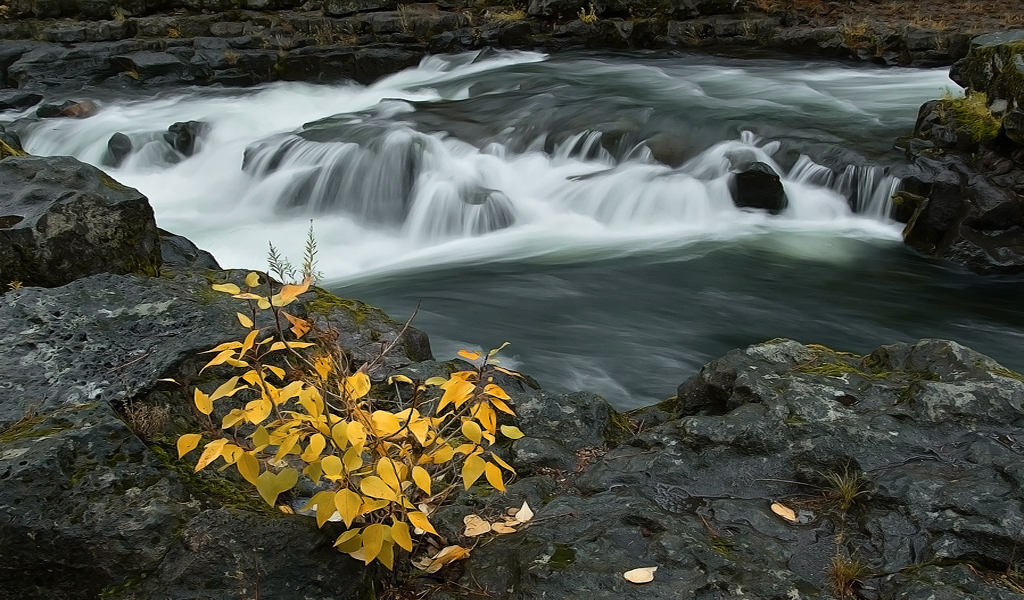
The Rogue River falls shown above is, in my estimation, nature’s exemplar of a waterfall. I’d also like to say that it’s a photographic exemplar, aka an excellent photograph, but for that it’s my own shot of the falls. Thus someone else will have to praise it or buy it or publish it for it to approach the lofty rank of exemplar.
On this page, over time, I’ll post a number of haibun by writers other than myself that in my view are both well done and help to show the variety of styles that represent contemporary English-language haibun.
For some of these exemplars, I’ll offer commentaries – close readings to explore what makes them work well enough to have been published by a journal editor.
Of course, my tastes in this selection are showing, which is why I think it’s important to post published works where an editor independent of the writer saw fit to select the piece for the enjoyment of his or her readers.
If you read any of these, please use the comments window where they appear to tell me what you think of them and a bit about why.
Early on in my haiku and haibun journey, editors rejected my haibun and several advised me to read haiku, saying that I’d not be able to write a good haibun until I had mastered the haiku part of haibun’s prose-haiku partnership. I had already looked at the many definitions of the two related genres (haiku and haibun), but found definitions lacking in specifics and mostly useless except as a rough guide, particularly the formulaic definitions like number of lines and syllable counts.
So I read a lot of haiku, both those of the Japanese masters and of the published works contemporary haijin and learned I simply didn’t get much out of them except that most didn’t follow the 5-7-5, 3-line, short-long-short structure learned in English classes.
And I mostly wondered why the editors picked the haiku featured in their journals. I concluded that haiku are not only difficult to write, but they are also difficult to read and understand, to “get the poetic spark,” so to speak. A problem was that I had a tendency to read them once quickly and to read too many at a time. In short, I was merely glancing at them, expecting a spark to jump out at me. I wasn’t engaging in what might be called “deep reading.”
I decided that in order to better understand haiku and thus, to be better able to write a worthy haiku and haibun, I had to first hone my haiku reading skills. In this way, I might be able to appreciate and understand why the editors selected some and not others, and particularly why they didn’t accept mine. And that’s what this three-part series is about – How to do a deep reading of haiku for better understanding of the nature of haiku.





 Ray Rasmussen: All Things Haibun Blog