About This Blog

Welcome. My intent is to show examples and to discuss contemporary English-language haibun and haiga. This also involves exploring haiku (haibun prose’s and haiga image’s little partner) and tanka prose because it’s so close in form and content to haibun.

  • haibun : a mix of title, prose and haiku (3-line poems)
  • tanka prose: a mix of title, prose and tanka (5-line poems)
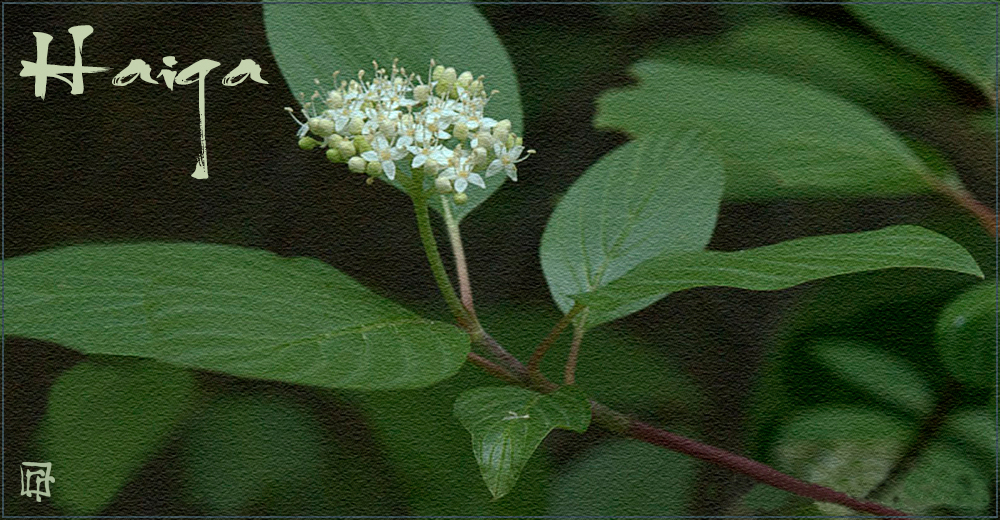
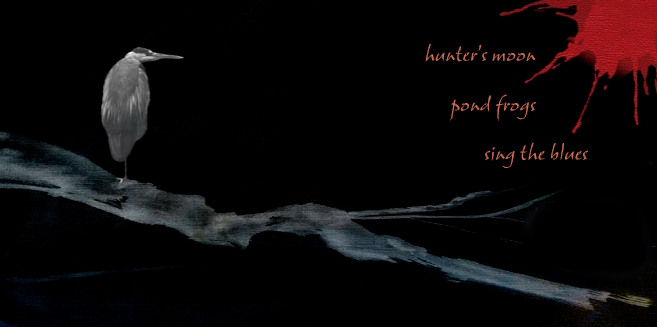
  • haiga: a mix of an image of any type (painting, photograph, digital art) and haiku

I provide examples and discussions of exemplars in these genres by contemporary writers and & Japanese masters like Basho and Issa.

I’ll be drawing from my 20 plus years of writing in these genres and editing journals that publish them. I’ve helped develop and was recently or currently am editorially associated with Contemporary Haibun Online.

And as a bit of background, I live at times in a rural area near Acton, Ontario and at times in Edmonton, Alberta, Canada. My partner Nancy and I enjoy hiking in the Rockies and in the canyon country of Utah, canoeing in Algonquin Provincial Park, and bicycling in our rolling hill country which helps beat the bugs in June and July. Both of us also enjoy photography and I’ll be mixing Nancy’s and my images on these pages.

My personal homepage is Raysweb: Photography and Haiku Poetry.

My first published collection: Ray Rasmussen, Landmarks (available on Amazon.com and Amazon.ca)

~ Ray Rasmussen

Basho’s Haibun “Hiraizumi”: A Commentary

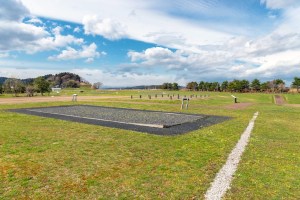
Field at present day Hiraizumi ruins site, Japan . . . all that remains of soldiers’ dreams.

Bashō’s travel journals, purportedly the earliest examples of haibun, are accounts of his late-in-life walking journeys through Japan. They are often cited as important reading for serious students of the form. More generally, they are held up as good reading for readers who enjoy poetic prose and who want a glimpse of the spirit of a man who lived several centuries ago.

For this commentary, I’ve selected the passage “Hiraizumi” from Basho’s The Narrow Road to the Deep North about the demise of the Fujiwara clan. The aim to to explore Basho’s use of haibun and haiku as an exemplar of Japan’s best known haiku and haibun master.

I’ve also added one of my published haibun as an example of a contemporary haibun composition.

Continue reading . . . -> Commentary

A Monkish Guy’s Post-Divorce Journey

Haibun by Ray Rasmussen with poems by Basho

courtesan and monk,
we sleep under one roof together,
moon in a field of clover

~ Basho

Outside, apple blossoms glow in the dusk. She lies on her side, head propped up on a pillow, her eyes telling me that something important is coming, my eyes taking in the candlelight falling on her breasts.

“I need to know more about you,” she says.

“Do you mean about me joking that I’m a monk?”

“Yes, because right now you don’t seem very much like a monk.” She glances at my hand wandering slowly along the curve of her hip.

“You’re thinking about Christian monks, the ones who lived in dank cells, ate lentils and hard bread, the ones who whipped themselves. Think instead of Basho, the Japanese monk who traveled extensively, shared his poetry with peasants and samurai nobles, loved flowers, enjoyed the company of women, the warmth of taverns. Think more of a European troubadour with haiku as his song.”

I'm a wanderer
so let that be my name—
the first winter rain
~ Basho

“Does this mean that I’m just someone who happens to sleep with you?”

“No, but I’ve been a partner all of my life and for now I need not to be.”

“So what am I?” she asks. “I don’t know how to tell my friends whatever it is we’re doing. It feels like more than dating or having sex and it’s not friendship because I don’t sleep with my friends.”

how reluctantly
the bee emerges from deep
within the peony
~ Basho

“Can’t we simply enjoy what we have,” I reply.

“I’m reluctant to give up the feel of your skin against mine, but I’ll have to think about this.” She pecks a kiss, dresses and leaves.

A week later her note arrives: “I have such good memories of our moments together. It’s a gift to desire and be desired, but we need such different things.”

winter seclusion—
sitting propped against
the same worn post
~ Basho

~ end ~


Author’s comments:

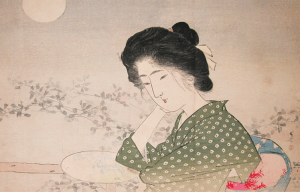
This haibun is my text intertwined with translations of Basho’s haiku and headed by Toshimine’s artwork. It was first published in the journal Simply Haiku.

I thought of this piece as a conversation with two Japanese artists: the haiku by Matsuo Basho, based on his work and poetic sensibilities while living as a traveling poet-monk in 17th century Japan and the woodblock print by “Moon and Bush Clover” by Tsutsui, Toshimine (1863-1934) which he painted on a fan.

Unless we’re Japanese scholars and/or citizens and/or zen practitioners or students of Japanese woodblock art, it’s unlikely we can understand the full illusions and sensibilities of Basho’s poetry and Toshimine’s artwork. Still, his words as translated speak to me and fit my sensibilities as a man growing up in 20th century North America, and in particular, one who found himself immersed in the “dating game” several years after a painful divorce. And there I was, once again, “in seclusion, sitting propped against the same worn post.” In case you’re worried, I’m fortunately paired up now with a wonderful gal who has a firm hold on my heart.

Notes:

All haiku are by Basho. The translations above were found at website titled “Basho” and cited R.H. Blyth, W.J. Higginson, J. Reichhold and Sam Hamill as translators of various haiku. “A Monk’s Journey” is haibun with a mix of my prose intertwined with translations of Basho’s haiku. It was first published in the journal Simply Haiku. I present it to show how writers can work in conversation, so to speak, with the Japanese masters and other contemporary poets. . . .

Haiku: Structure & Poetic Essence

Haiku Structure:

If you studied haiku in school and learned that the structure of haiku is 17 syllables presented in three lines of 5, 7 and 5 syllables (e.g., a symmetrical arrangement), much of the following information will surprise you. This is the first of two presentations on the structure of haiku used by most contemporary haiku poets and most haiku published in journals with independent editors.

Continue reading . . . -> Haiku: Structure and Poetic Essence