What Are We Writers Up To, Really?

Ray Rasmussen

This essay was previously published in Drifting Sands Haibun.

I’ve recently been reading essay collections as a means of getting away from the easy-to-fall-into routine of mainly reading haibun and, as important, a way of escaping the very dismal world news. Personal essays tend to offer good, imaginative writing with a poetic flavor.

The type I seek are quasi-autobiographical, but neither overly prosaic nor didactic. Like haibun they tend to focus on the personal experiences of the writer but are typically much more expansive than haibun. Thus they’re akin to non-fiction and short memoirs, providing a larger bit of a lived life than haiku (which represents but an Ah Ha! moment in the poet’s life) and haibun and tanka prose (which represent an outstanding experience, a more expansive snippet of life).

Michael Chabon’s Manhood for Amateurs, is one such collection I’d recommend to anyone who likes well-written memoirs and personal essays. In a passage from “The Loser’s Club,” Chabon offers his own experiences and thoughts about the motivations of artists of any stripe:

“Every work of art, every project seemingly created for self-realization, every impulse to create work that can potentially be seen or read or listened to by others is one half of a secret handshake, a heliograph flashed from a tower window, an act of hopeless optimism in the service of bottomless longing. Every great record or novel or comic book or poetry collection convenes the first meeting of a fan club whose membership stands forever as one, but which maintains chapters in every city—in every cranium—in the world.”

What Motivates Haibun and Tanka Prose Poets? Or at least me?

Chabon’s passage led me to musing about what motivates us haibunists to send our writing to journals and writing forums, to post it on personal websites and blogs, to offer it to publishers and, of course, send it to friends and family. Are we, as Chabon asserts, driven by a “bottomless longing” for a “fan club.”

I personally don’t like the idea of having fans which implies a kind of cultish devotion to a celebrity. However, Chabon, who makes his living from his writing, does want and need fans. They tend to buy his books, and thus help feed, shelter and clothe his family. I don’t earn a living from my writing, and if I tried, I’d be starved out in a matter of months. So far, I’ve earned about $300 Cdn in Royalties from my Amazon Posted collection: Landmarks. Nor do I know of any haiku genre poets who make a significant amount of money from the sale of their collections.

I also don’t desire a “bottomless” readership. But I would feel good if a good number of people to read my work, far more than the 300 or so that have been purchased, many by family and friends. I’d also be please if more people would use the “comments” pages in our journals to let me know that they’ve appreciated something I’ve written, but while a simple, “like” would be okay, more detail would be even nicer. I’ve deleted the names, but posted the comments of many readers who commented on this essay when it appeared in Drifting Sands Haibun 6 years ago. Bless you all!

I’d also like to see haibun in general, not just mine, appearing in mainstream poetry journals and literary magazines. Even Reader’s Digest, read by a wide variety of people, would make me happy because RD is not just writers writing for other writers. I’d also like to see the number of writers grow dramatically in the next decade and the readership of our collective writing grow.

But let’s be realistic. Not much of what I want, and particularly what Chabon thinks I want, is going to happen. I’ve not yet been discovered by a publisher, either of literary or Reader’s Digest stripe. Nor have I even been found by the mainstream poetry folks. Nor does our genre have a superstar like free verse’s Billy Collins with a style that allows him to both make a living (I’m guessing) and enjoyed by a wide variety of readers. But there are very few poets in any genre who have that sort of readership.

So, if I long for anything, it’s simply what I have, a community of like-minded writers, a reasonable number of readers, a number of good venues to which I can submit my work, and a flock of volunteer editors who read and assess my work. Even if they reject a piece, I only grumble for a year or so.

I’d also like to have a number of people sending and exchanging comments on both my work and the work of others. I comment from time to time by writing commentaries and reviews. It’s useful that some online journals, drifting sands haibun and Contemporary Haibun Online (to name two), have comments sections allowing detailed comments to be made, much more than a simple “I liked it.” Alas, I didn’t notice many meaty or even many simple I-like-it comments in either the last issue of CHO or DSH addressed to the writers.

So here are two questions that come to mind from what I’ve written above. Why do we care about readership? And since we care (at least I think we do) why aren’t more people reading and commenting on haibun?

Why Do We Care?

My answer is that serious haibun composition, and writing of any type, requires a good deal more time and energy than a tweet or short facebook post with the message: “Here’s where I am, what I’m doing, and a pic showing who I’m with.”.

Serious writing for submission and publication requires even more work, particularly redrafting until there’s a high level of quality in content and style leading to a personal story worth readers’ time and attention. It’s also much more demanding than simply posting early drafts on an online writers’ forum, for example, where mostly people send either “attaboys” or polite silence in return. Beyond writing the piece, the act of preparing and sending a submission to journal editors takes an enormous amount of work. Even more work is involved in preparing a manuscript for a publisher or for self-publishing. And then there’s the ego cost. Getting those “No Thanks” from editors and publishers is costly to the writer’s spirit – I don’t care who you are or how thick your skin is – it just plain hurts. And never getting comments on the work also produces a kind of hurt, a feeling of emptiness that our note in a bottle hasn’t been picked up and read by a beachcomber, and may never be.

Why Aren’t More People Reading Haibun (and Commenting?)

My answer is that haibun is a very small drop in the pond of haiku poetry, and but a water molecule in the ocean of mainstream poetry and various related short genres like short stories, memoirs and personal essays. Our publication venues don’t number much more than 20 and the multi-genre venues like Modern Haiku and Frogpond only publish a few haibun per issue along with hundreds of haiku. The number of writers in our haibun community is probably less than 500. That’s just an impression I formed while editing over the last 20 years at Haibun Today, Contemporary Haibun Online, A Hundred Gourds, Simply Haiku, The World Haiku Review and Notes from the Gean. The same names tended to reappear at least once a year and many repeated in almost every issue. When a name disappears, I feel the loss.

Our mass mailout announcing issue releases of Haibun Today was sent to about 400 folks associated with haibun and/or haiku. The software stats told us that only about 250 opened the issue as a result of the mailing. Of those, we don’t know how much of the issue was actually read. (Don’t worry, we’re not the secret email police or at least not very adept at it). I think that many of us click on our own pieces to see how our work looks on the journal’s pages, and then look at a few others. I admit that I look at my own and then shop for my favorite writers and then shop a few titles that interest me. And then I burn out.

Writing as a Solitary Journey

Chabon also wrote:

“Art, like fandom, asserts the possibility of fellowship in a world built entirely from the materials of solitude. The novelist, the cartoonist, the songwriter, the poet, knows that the gesture is doomed from the beginning but makes it anyway, flashes his or her bit of mirror, not on the chance that the signal will be seen or understood but as if such a chance existed.”

Advice for New Writers to Haibun

I think that lack of response and particularly those early rejections are very discouraging to new writers in any genre.

I’d suggest that you keep writing through the rejection period and learn what you can. Eventually something will come of it. Do seek places where you get coaching and honest feedback and your skills will improve and writing memoir type pieces means you’ll come know yourself better.

Having said that, I know that you will or you won’t keep at it according to the thickness of your own skin and your need for responses and contact. In that sense, Chabon is right, particularly early on, writing is a solo journey and with respect to sailing into the world of writing, many people probably jump the boat and swim home.

If you keep at it and get that first acceptance, I can predict your spirit will rise and motivation increase. And after a few more “Yes Responses” you might even be hooked. Or you might not. It is, after all, a lot of work.

One thing that will happen, or at least happened to me, both as a photographer and writer is that I now appreciate at a higher level both photography and fine art and writing in many genres. Consider your writing journey not so much as a gathering-of-fans endeavor, but more as a poetry appreciation course.

Of course, there’s always the noble idea of “writing for oneself.” I think it’s true that writing can be a path to the fulfilling that famous “Know Thyself” adage which is thought to be a path to leading a more worthy life. Particularly, largely autobiographical writing – a series about the highs and lows of the one life we have to live. As such, writing is cheaper than a weekly meeting with a shrink and it might be more effective.

And when you finally do take the step to feel good enough about your writing to produce a collection and offer it to the world, I think you’ll feel, as I do, that you’ve accomplished something important. At the very least, you’ll have left a legacy for children and grandchildren and have a gift to give to your friends. Many of my friends have told me that my Landmarks collection sits in a prominent place in their bathroom. Don’t get me wrong … haibun make for good short reads while busy with the daily unmentionables. And, to be honest, it makes my day thinking that I’ve helped someone find enjoyment in those visits.

Notes:

Quotes from “The Losers’ Club” in Michael Chabon, Manhood for Amateurs: The Pleasures and Regrets of a Husband, Father and Son, HarperCollins, September 30th 2009. I’ve paraphrased Chabon’s passages a bit, but they’re quite close to the original.

Another collection of personal essays I’ve found worthwhile is E.B. White’s One Man’s Meat, Tilbury House Publishers, 1942.

Yes, for whatever our reasons, we’ve chosen to live in relative solitude as writers when we joined what might be called “The Tiny Companionship of Haibun Poets.” And we’re not unique. This is also true of the Bigger Company of Haiku poets and the Very Big Association of Mainstream Poets.

For myself, I enjoy seeing the work of other writers and feel I’ve gotten to know them precisely because we are a small gathering. And that’s sufficient, isn’t it?

19 Comments on “What Are We Writers Up To, Really?” Again, Bless you all. Made my day!

  1. I love haibun. I have admit that I read far more than I comment on. I prefer to rate a haibun because so many times it’s the gordian knot holding it together that appeals rather than a single comment-able part. The kinds of responses I like most on mine are ones that say I can relate to that even when it’s mind blowing surreal.
  2. Yes, I am still trying to survive the many rejections phase. It has helped me to be more critical of my own work and to read others for clues to their successful publication. Thanks Ray!
  3. I, too, hesitate to comment on the works of others because I am a novice and don’t think I have anything to offer. Ray’s essay makes the point that “useful” is not the point, recognition ( in the interpersonal sense of the word) is the point, community is the point, vision is the point. Thank you.
  4. Ray, I read every haibun and tanka prose in each issue after the first one of mine published in HaibunToday, until I hit a personal stumbling block and left the scene. Same with CHO. Ahhh…now you burst my bubble. I thought writers were like me and so I thought at least everyone who published in that issue read mine! Oh, how egotistical of me. No big deal. I enjoyed the process and being published. Just stumbling back in. Don’t foresee myself writing much. Maybe after reading a bit.
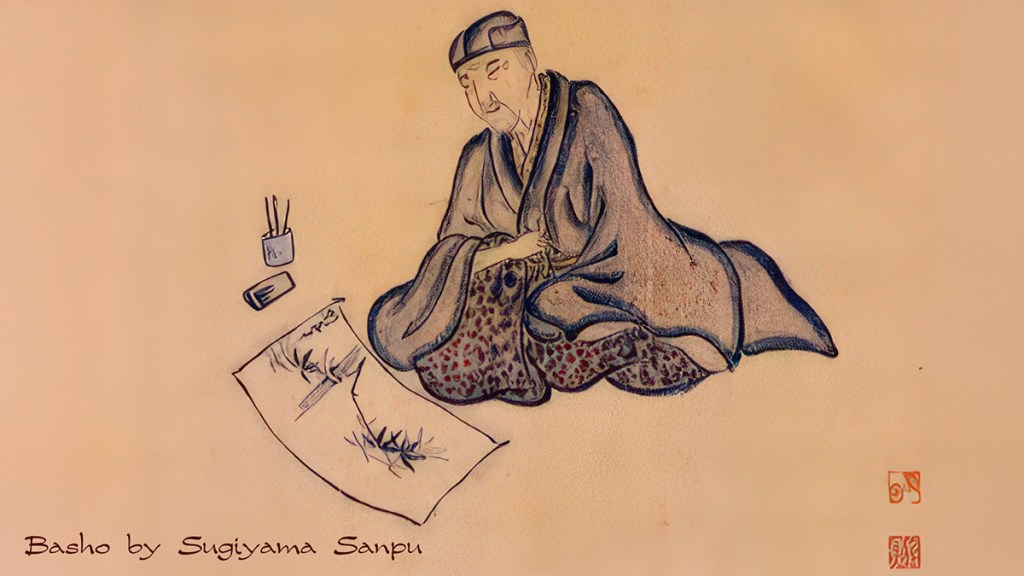
  5. Thanks for that wonderful piece, Ray. It dwells on writerly experiences in such an honest spirit. I was also reminded of Bashos’s views on poetry from the opening paragraph of The Records of a Travel-worn Satchel:“In this mortal frame of mine which is made of a hundred bones and nine orifices there is something, and this something is called a wind-swept spirit for lack of a better name, for it is much like a thin drapery that is torn and swept away at the slightest stir of the wind. This something in me took to writing poetry years ago, merely to amuse itself at first, but finally making it its lifelong business. It must be admitted, however, that there were times when it sank into such dejection that it was almost ready to drop its pursuit, or again times when i was so puffed up with pride that it exulted in vain victories over the others. Indeed, ever since it began to write poetry, it has never found peace with itself, always wavering between doubts of one kind and another. At one time it wanted to gain security by entering the service of a court, and at another it wished to measure the depth of its ignorance by trying to be a scholar, but it was prevented from either because of its unquenchable love of poetry. The fact is, it knows no other art than the art of writing poetry, and therefore, it hangs on to it more or less blindly.”
  6. On the rare days when I scroll through my haiku, haibun or other poems (including the mediocre ones that have not been sent for publication, or have been rejected), I clearly see a record of my life’s journey, and relive the many moments that I have forgotten, in a slightly different light. So, in that sense, it’s also an important journalling that helps one grow, I feel.(And the shameless plug: My poetry collection, In The Sanctuary of a Poem, sold about 600 copies and then was largely forgotten. There are two shops here in Goa (a clothing store, and a seed store) that sell about 20 copies in six months, and then I replenish the stock).
  7. Initially I was shocked that ‘Landmarks’ sold only a few 100 copies, and I’m glad I wrote to Ray probably a year ago now, telling him that ‘Landmarks’ had become one of my favourite books in any genre and was the book that really got me going on the haibun path. But of course a sale of 100 books is actually pretty good going in the world of haiku and haibun (even if friends etc make up a good percentage of sales). Initial print runs don’t number much above this and a long time ago, in my mainstream writing days, I remember once reading that only Hughes, Betjeman and Gunn sold more than 200 copies of their ‘slim volumes’. I have re-read ‘Landmarks’ on a number of occasions now and it has become nicely dog-eared in next to no time. Perhaps we should think about the success of a book in terms of how it is treasured and re-read by those who bought it, rather than sales figures – not that it would be possible to measure this with any degree of accuracy!
  8. As one new to haibun, I’ve had the sense that I didn’t have anything “useful” to offer in a conversation. Your thoughts here make it clear that “useful” is not necessarily the point; just a note about what I liked in a haibun is welcome. I do like using haibun to comment about intriguing little aspects of the world, not just the more personal memoir topics.Thanks for this essay, and for the many ways in which you’ve made it possible for the “tiny” haibun corps to thrive and expand.
    1. What an enlightening and beautiful essay dear Ray. Your thoughts made me contemplate as to why we write haibun and why we don’t comment on the haibun of our poet friends. It’s true that we write to express ourselves, to relive some moments of our own life, our childhood memories and stray encounters. We do read the published haibun, (albeit selectively) and enjoy them too. Yet as you say writing is a solitary journey and your thoughts are inspiring for writers. Here I would also like to add a word about editors who take time to guide and refine the submitted poem rather than an outright rejection. Their kindness and guidance motivates writers to write and submit more. Ultimately the art needs more reading, more practice, more honesty and humility. Grateful Ray for the guidance and ideas given.
  9. Such sound advice. I love what you’ve written and being new to haibun I will keep your thoughts in mind. I usually write because I need to. Someday I might submit and keep my expectations low. Even thick skin hurts. (Lol)
  10. Ray, thank you for this inspiring essay. I am immeasurably grateful to have found the ‘Haibun Way’– loving the wind, ‘sailing into the world of writing’, and doubt I will ‘jump the boat’ anytime soon. Very much a novice, with three haibun accepted by online journals so far, though I dare say–I’m hooked! There is a longing, yes, but not for fans, only to share with like minded beings.
  11. Thanks for writing this essay, Ray. It resonates with me and many others who felt early on being drawn toward what Tom Clausen calls “A Haiku Way of Life.” (For those who have not yet read or do not recall Tom Clausen’s 10-page essay from 1998, download a PDF of it from The Haiku Foundation’s digital library.) Some of us have also explored a side road called “Haibun Way,” and others have traveled down “Tanka Road” and meandered along “Haiga Path.” They are what William Least Heat Moon calls “Blue Highways,” roads not far from the interstates but overlooked, unused, almost hidden.Reading the following paragraph from your essay got me thinking about an “official” name for this widespread guild of isolated writers we have unofficially formed or joined, but no name could possibly encompass its many “Third Order” vocations:“Yes, for whatever our reasons, we’ve chosen to live in relative solitude as writers when we joined what might be called ‘The Tiny Companionship of Haibun Poets.’ And we’re not unique. This is also true of the Bigger Company of Haiku poets and the Very Big Association of Mainstream Poets.”However, your “Tiny Companionship” name works just fine, with a nod to Dylan Tweney’s tinywords. And, yes, I bought, read, and enjoy your “Landmarks: A Haibun Collection” for my Kindle and recommend it to everyone who writes and cares for haibun. I look forward to reading your next collection of “inuksuit,” but this time with photographs!
  12. Just the joy of creating that children enjoy when mark making , the joy of creating something as part of a creative universe. These are enough for me.
  13. Chabon’s statement that “Every work of art, every project seemingly created for self-realization, every impulse to create work that can potentially be seen or read or listened to by others is . . . an act of hopeless optimism in the service of bottomless longing” brought a sense of relief. I am not alone with bottomless longing! My core longing is to write as a way of making sense of the world of humans and to be connected with nature. I began recording my observations and reflections decades before discovering haiku and haibun – partly because it was enjoyable and partly so I wouldn’t forget unique experiences. What motivates me to write haibun? My old jottings could be left in their original form for my own enjoyment and yet I find myself mining them for material for haibun. I enjoy the challenge of linking title, prose and haiku into haibun. But, I often wonder why I take the time to transform some of them into haibun worth submitting for publication.I was so caught up in pondering the longing to write that I was surprised to realize longing for readership was the primary focus of the essay. I do not long for a fan club, but I do long for people to read what I write and, yes, some of that longing is for my writing to be appreciated. Part of what drives me to publish haibun is that it is a way of saying “hey, look at this amazing thing I saw” to a community that is observing life as carefully as I am. I suppose that is a way of breaking the solitariness of writing.I can only offer these vague ideas about why I write haibun and strive to have it published. All I know for sure is that a deep longing calls me to do it and so I do.
  14. Ray, As a “fan” of your “largely autobiographical work,” I particularly appreciated your inclusion of this notion in your essay:
    “I think it’s true that writing can be a path to the fulfilling that famous “Know Thyself” adage which is thought to be a path to leading a more worthy life. Particularly, largely autobiographical writing – a series about the highs and lows of the one life we have to live.”
    In pursuing a short form career (if we can call a largely unpaid endeavor a career), the work one willingly undertakes can allow not only the honing of one’s writing, but the refinement of oneself. The reflection and introspection autobiographical writing requires has the potential to deepen self-awareness and broaden consciousness. As a person with an active interest in Jungian ideas, I would submit that autobiographical writing is a form of alchemy, and as such, is one path to individuation. This could explain why authentic, autobiographical work so often resonates with a uniquely palpable energy. Because it has been lived, it is alive.
    Thank you for delivering a thought-provoking essay in your characteristic grounded, relatable way.
  15. I find a piece of writing is a way to explore and unravel the self. I don’t write for an audience, I write to make meaning, to decode the conflict within me, lay it out in neat categories where I can look at them and then go back to them again and again, shuffling these categories, mixing them up, arranging them under different rubrics to make sense of patterns.The act of reading is quite like finding a friend among strangers. I tend to read randomly picking up pieces here and there. It’s also about access. There are certain people whose work I will actively pursue, then there are others where I have literally stumbled upon a piece and enjoyed it. Although I read and try to write regularly, there are periods where I need space. It is like taking time out because one is exhausted by the form or style or voice. I haven’t actively read a novel in a long time. More and more, I find, I’m edging towards work that is shorter, crisper and flows honestly without pretense. I like Haibun for that reason because many writers tend to write from that sort of space. The link and shift within a piece of writing then becomes interesting because someone, has arranged a new pattern while still exploring the duality(juxtaposition) that exists in this world. I find the simple often the most beautiful, the honest often the most resonant.
  16. I share your sentiments, and was heartened by your comment, “This could explain why authentic, autobiographical work so often resonates with a uniquely palpable energy. Because it has been lived, it is alive.” Thanks for the breath of optimism.
    For the artist, poetry might be the most rewarding of the arts (who knows, but I cherish the “alchemy”, as you say). This is what motivates to make the effort. But it sure is nice when someone appreciates the finished product.
  17. Enjoyed reading this. It’s always a pleasure to see how I measure up to what or how other writers do things or if I’m completely off base!
  18. I found your comments so relatable. As a relative newcomer to haibun and tanka prose, I have benefited immeasurably from writers and editors like you. Thanks for sharing some of your journey with us.
  19. i loved reading this essay. The writing life is a lonely one. I always appreciate your careful reading and keen insights.
Day’s End: a Visit to Slickhorn Canyon

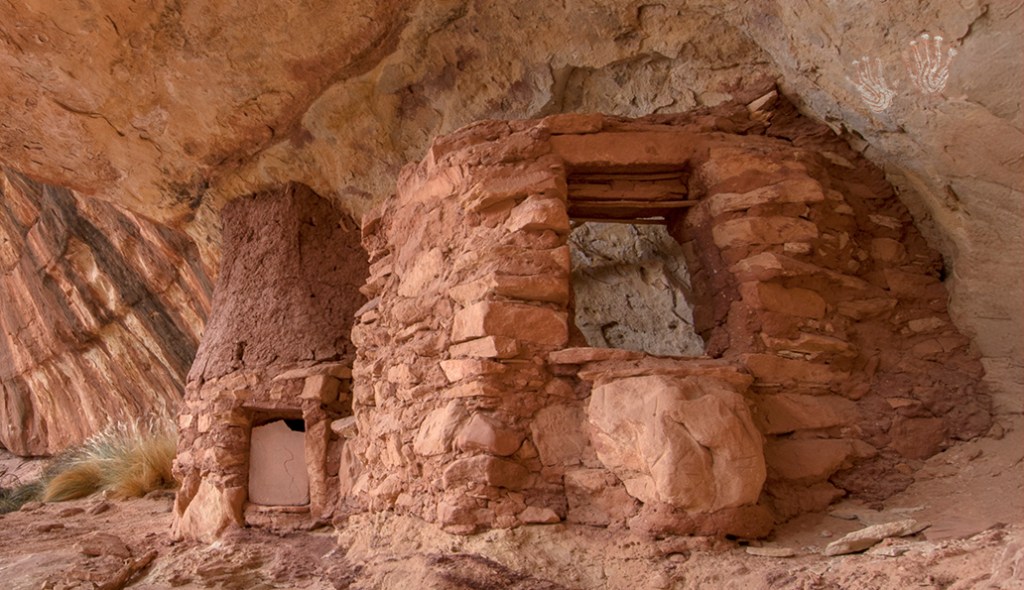
Here, in this remote, twisted canyon, countless generations of aboriginal puebloan peoples lived. One thousand years ago, they faced a 100-year drought, and lost out to it. It’s likely that some farmers became nomads, raiding the produce of others who had struggled on; likely there were skirmishes in which one family battled another for survival.

scattered pot shards
all that remains of a
nameless family

I rest in an alcove’s shade near crumbling walls of stone and mud located high on a sandstone cliff. Ghostlike handprints are painted above the doorway. Below is the wash whose intermittent waters fed their small plot. Where corn and squash once grew, there’s nothing but cactus.

I listen to the wind whispering, imagine it’s them speaking of their failing crops while sharing a scant evening meal.

I don’t know who these tears are for.

sheltering in
the broken walls
a whiptail lizard


Notes: Published in Haibun Today 5:4 December 2011

This haibun was inspired by the chinese poet Du Fu’s “Days End”. I used his simple structure and put in my on theme related to my visits to the (sometimes intact) ruins left by the ancestral puebloans of the four-corners region of the United States.

Haibun Commentaries: Exploring the Work of Exemplary Writers

If you want to learn about poetry — if you want to “access” it — what you need to do is find great poems you like, figure out which are worth rereading and then reread them.
~ Robert Pinsky

Pinsky goes on to suggest that you learn what they’re doing and bring what you’ve learned into your own writing.

Because haiku is so important a component of haibun, I often visit The Heron’s Nest haiku journal to see the Editors’ Choices and to read their comments on the poems they’ve selected. But I read the haiku first to form my own reactions and then read the editors’ comments.

In similar vein, as a means of improving your understanding of haibun and improving your composition skills, on occasion it’s worth the time to explore haibun commentaries on the work of contemporary exemplars and the Japanese Masters and doing deep, rather than doing quick, cursory readings.

Over time in this section, I’ll post haibun that I or others have selected along with comment on what makes them outstanding.

The purpose is to encourage writers, particularly those new to the haibun genre, to regularly engage in deep readings of haibun.

Commentary #1: Glenn Coats’ haibun “Witness”

Commentary #2: Japanese Master Matsuo Basho’s “Hiraizumi

(Others to follow)

Notes:

Epigraph is from Robert Pinsky, Singing School: Learning to Write (and Read) Poetry by Studying With the Masters, WW Norton, WW Norton, July 29 2014. Pinsky is an American poet, essayist, literary critic, and translator. From 1997 to 2000, he served as Poet Laureate Consultant in Poetry to the Library of Congress. He is the author of nineteen books, most of which are collections of his poetry.

You may find it useful to read David Orr’s essay “Points of Entry” for more information about accessibility and why a good way to learn to write well is to do deep readings of the masters in your chosen genre.

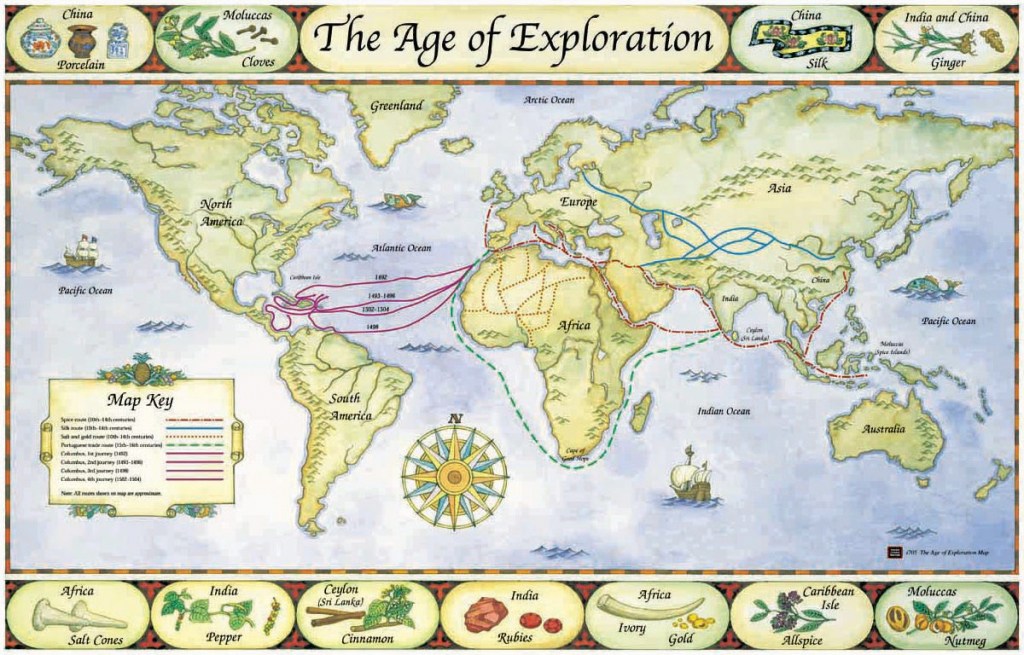
Age of Exploration Map taken from Slideshare.net.

A Commentary on Basho’s Hiraizumi


“Haraizumi” is single passage (aka chapter/haibun) from Basho’s The Narrow Road to the Deep North (Ono no Hosomichi)

“Poetry is the revelation of a feeling that the poet believes to be interior and personal which the reader recognizes as his own.” ~Salvatore Quasimodo

Part I: Commentary

Bashō’s travel journals are some of the earliest examples of haibun and prose passages in early Japanese literature. His journals are accounts of his late-in-life walking journeys through Japan. They are often cited as important reading for serious students of the form and for anyone who writes in the haiku and haibun genres. More generally, they are held up as good reading for anyone who enjoys prose passages mixed with haiku and who wants a glimpse of the spirit of a man who lived several centuries ago.

For this commentary, I’ve selected the passage “Hiraizumi” from The Narrow Road to the Deep North about the demise of the Fujiwara clan. I chose it because as Quasimodo suggests, Bashō expressed a feeling in this piece that I recognized as my own in my recent travels in the Southwest United States. You may wish to read “Hiraizumi” prior to reading this commentary. If so, go here to open a second window.

There are several keys to understanding Bashō’s success in establishing haibun as a serious form of Japanese literature. The first is amount and level of descriptive detail – what might be called ‘reportage’ – that provides a context for the poetry that accompanies it. Examples include:

“The ruins of the main gate greeted my eyes a mile before I came upon Lord Hidehira’s mansion, which had been utterly reduced to rice-paddies…”

“The ruined house of Lord Yasuhira was located to the north of the barrier-gate of Koromogaseki, thus blocking the entrance from the Nambu area and forming a protection against barbarous intruders from the north.”

Of course, descriptive detail without some measure of lyrical phrasing would be monotonous. Lyrical passages that touched me included:

“It was here that the glory of three generations of the Fujiwara family passed away like a snatch of empty dream,”

“When a country is defeated, there remain only mountains and rivers, and on a ruined castle in spring only grasses thrive.”

And haibun prose allows a third key element ― some telling as well as showing:

“I sat down on my hat and wept bitterly till I almost forgot time.”

A fourth element is Bashō’s closing haiku which can be viewed both as a succinct summary of his feelings, but also as a more general poetic expression about that most serious human foible called ‘war.’ As with many of the haiku in Narrow Road his haiku step out to a new level of insight and lyricism:

summer grasses
all that remains
of soldiers’ dreams

~ Bashō (trans. L. Stryk)

Putting it all together, what is haibun according to Bashō?

• Rich descriptive detail that sets the stage
• Poetic phrasings that stir the reader
• A modest amount of showing as opposed to telling
• A haiku that steps out from the prose and takes us to a new level of feeling and insight
• An overall succinctness that allows us to enter and leave a scene in a short reading

While these are the nuts and bolts of haibun, they don’t explain the whole. Haibun is a form of storytelling and these nuts and bolts have to be put together in a way that captivates the reader. As such, haibun prose goes well beyond a typical account of an outing which as Cobb has put it “is often as disorganized and unrooted in thematic content as a set of holiday snaps.”1 Haibun also goes far deeper in its storyline theme than the “go here, see this, eat that, pay this much” type of travel writing that one finds in newspapers and magazines. Of course, good travel writing can also be literary. Nor is haibun mere journalism. As Cobb has put it, “I view the haibun writer as a literary artist, someone who has high regard for authenticity, but not afraid to bend facts when it suits, setting poetic truth above a factual narrative, and free to rearrange chronology.” Cobb further reports that according to Yuasa, Bashō, did indeed “take such liberty as to change the natural course of events, or even invent fictitious events.”

With his long term perspective on the English-language haibun scene, Ken Jones states that “The haibun has come a long way in recent years. Bald narrations of country walks, rendered in flat, deadpan prose, and enlivened only by their haiku (“diamonds in mud banks”) are now mercifully few—though still occasionally published.”2

Summing up, “Hiraizumi” is a good story with the key compositional elements of haibun to support it. Bashō’s piece takes the reader into the Japan of several centuries ago, into the cultural-historical sensibilities of its people, and into the poetic style of expression that he made famous and that instructs us today, as writers. It is an eloquent statement about the transient nature of our lives and the futility, yet omnipresence, of war.

Part II: A Personal Recognition

“Hiraizumi” brought to mind the ruins that I had recently come upon in one of southern Utah’s sandstone canyons. After hiking several hours, I had found a way down into a remote, seldom-visited place named “Slickhorn Canyon.” There I came unexpectedly on the ruins of ancients who have been given the name “Anasazi” by the Navajos who now occupy the nearby lands.

Some of the ruins looked as if they had been abandoned only yesterday; others were reduced to little more than piles of rubble. Still visible were the finger impressions made when the builders pressed mud as mortar in between the building stones. One spot of mud-mortar had an impression of a baby’s foot.

Bashō doesn’t tell us what led to the demise of the Fujiwara clan, but from the omnipresent wars of our last century and from the records of Japanese historians, we can readily infer the causes. And what about the Anasazi? They disappeared around 1100 AD. While there is neither a written nor an oral remembering of the Anasazi, research from the natural record, the ring thickness of sections of 1000 year old trees and the carbon dating of debris from the sites, tell us that they faced a 100 year drought. We can guess that skirmishes developed between those whose farms had failed and had thus become nomadic raiders and those who had managed to carry on (and sometimes had their farming efforts plundered).

I sat in the shade near one ruin that had handprints painted above the dwelling’s doorway. I could imagine men gathered after a fruitless hunt, women preparing the evening meal from the sparse pickings dictated by a prolonged drought and the children, hungry, perhaps dying of starvation. All about me were pot shards, the broken remains of generations.

Like Bashō, I felt a deep sadness for the plight of these ancient peoples.

Part III: A Conversation of Sorts with Bashō

After reading Bashō haibun, I decided to pen a haibun modeled on “Hiraizumi.” I wanted to explore the structure of his style while utilizing my own experiences in Slickhorn Canyon as context. Whether my piece succeeds or fails is of little importance. Writing it helped me to identify with Bashō’s journey through his Japan. And it reminded me that the plight of the Anasazi is one that has been repeated throughout our disaster- and war-inclined human history, that these ruins were not just interesting artifacts, but places where families and entire clans once lived and then disappeared.

After writing it, I felt as if I had had a deep conversation with a travelling monk who loved to write poetry.


Notes:

1. David Cobb, “A Few Timely Heresies about English Haibun,Blithe Spirit 10:3 September 2000 and reprinted in Haibun Today 5:4 December 2011.

2. Ken Jones, “Writing Reality: Fictional Haibun Stories,” Contemporary Haibun Oonline 3:3, Sept 2007.

3. Ray Rasmussen’s haibun, “Slickhorn Canyon,” which was modeled on Bashō’s “Hiraizumi” is published in Haibun Today 5:4 December 2011.

4. Salvatore Quasimodo, poet and literary critic, was the winner of the Nobel Prize in Literature, 1959.

Conversations with Issa: A Haibun


I’ve resided in a remote Ontario cottage for several weeks. Yesterday, a blizzard was blowing and so I stayed in and enjoyed conversing with Issa via the medium of his translators’ books. As I read and write notes, I notice a particularly ominous spider web and remember that Issa offers this haiku for consideration . . .

Don’t worry spiders
I keep house
casually
~ Issa

And instead of engaging in my usual spider mayhem by employing the broom as a weapon of web destruction, I keep my eye on the spider and move my desk a comfortable distance away while I continue to read Issa’s travel journal, Oraga Haru (The Spring of My Life).

Today the sun is out and I don snowshoes and come across numerous tracks: wild turkey, fox, deer, and porcupine . . . and, again, recalling Issa’s haiku, mentally compose derivatives. This is one I felt came close, since it closely replicates Issa’s, yet has my own context.

Don’t worry turkeys
I hunt
ineptly
~ after Issa

As Issa and I move through a mixed hardwood forest we come across a wildflower meadow, which brings to mind a walk last summer with Nancy, my partner, whom I’m missing.

Issa offers these thoughts on flower gazing . . .

We walk on the roof of hell,
gazing at flowers

~ Issa

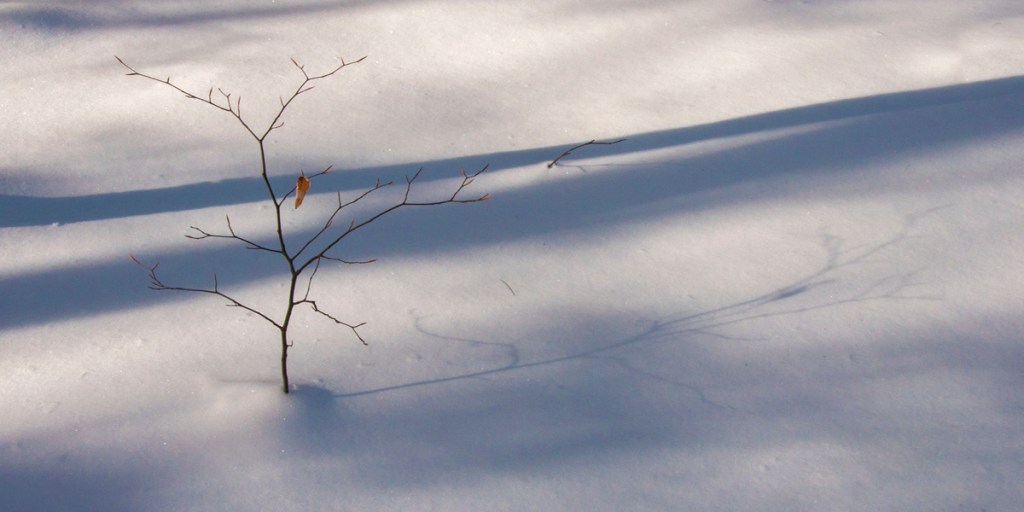
No wildflowers here in winter, Master Issa, but I’m taking photographs of the long blue-grey tree & shrub shadows cast by the setting sun. And yes, I agree, photographing scenes is akin to enjoying flowers while ignoring humankind’s woes. And, having confessed, I went about building my own version of Issa’s haiku.

We live in a world of chaos,
while building snowmen
~ after Issa

On my last evening with Issa, I look out at the leafless trees, and think about how for a month I’ve shed routines, obligations, news reports and friends – no phone or email here – and felt the dual pains of loneliness and regrets.

And Issa, I know from the biographies of your life, you had many painful experineces to overcome, and I read that you offered your thoughts on transcendence:

What good luck!
Bitten by
This year’s mosquitoes too.
~ Issa

True enough, Issa, may I call you ‘friend’. Although bitter cold, this has been a good winter retreat for beauty, your companionship and contemplation of your sense of compassion and thoughts about transcendence.

What good luck!
Chilled by
This winter’s biting cold too.
~ after Issa


afterword:

I wrote this piece with the view in mind that it would do more for me to try to write haiku (and haibun for that matter) with Issa’s work as a model than to simply enjoy reading Issa’s work and leave it at that. While I like some of my derivative haiku above, I don’t like all of them. While I think Issa’s last haiku, for example, works, I don’t think my derivative is as accessible as is the irony in his. And, I’m pretty certain that if the editors of a haiku journal looked at my derivatives without having known about or ever seen any of Issa’s work, they’d not accept my three haiku derivatives as good enough to publish. But, after all, Issa wasn’t appreciated in his day by the other prominent haiku masters and pundits of his day.

What about haiku orthodoxy. If you scour the Internet for the ‘what is’ and ‘how to’ of haiku, a common pronouncement is that you mustn’t personify animals and inanimate objects. Did you notice that Issa is breaking that “rule”? He’s personifying spiders by speaking to them. His second haiku also breaks the “rules.” It’s more a philosophical musing than a focus on immediate images drawn from his environment. His third haiku is a clever bit of wit, what some would call a ‘ditty’ or ‘witticism.” And thus some editors will insist it’s a senryu, a haiku in form, but not a pure haiku … it’s more focused on humour and sentiment than the natural world.

Here’s a comparison of a haiku of mine that was published in Modern Haiku that used some of the same natural context, but that the editor accepted as focused on the natural world.

monkshood bloom –
the whine of mosquitoes
seems diminished

Both mention mosquitoes, but Issa’s strikes me as a bit removed from nature and, again, more of a philosophical musing.

Isn’t derivative writing also a bad thing?

If you’re interested in this idea that you can expand your own writing repertoire by modelling the work of other writers (and acknowledging that you’ve done so), you might be interested in my article on the subject that appeared originally in Contemporary Haibun Online: The Role of Modelling in Haibun Composition.

notes:

The haibun was previously published in the A Hundred Gourds journal.

The haiku in italics are by Kobayashi Issa (Trans. Robert Hass).

If you enjoy Issa’s haiku, a website I often visit is David G. Lanoue’s “Haiku of Kabayashi Isssa.”

Read an excerpt from Issa’s haibun journal and commentaries on his style.

The two tranlations of Oraga Haru I read and relied on are: Sam Hamil, Kobayashi issa: The Spring of my Life and Selected Haiku; Nobuyuki Yuasa, The Year of My Life: A Translation of Issa’s Oraga Haru.

Red Licorice

. . .  if they fail to express what is in their own minds,
what is the use, no matter how many poems they compose!
~ Ryokan

The doorbell rings. On the porch, standing in a downpour, is a very wet girl in baggy clothes.  Her hair is mouse-brown with red and green streaks, her face festooned with shiny bits of metal and orange lipstick and an alarming red rash.

She can’t be selling Girl Guide cookies. What’s this about?

“Yes,” I say.

“Hi, I’m Lisa, Janey’s friend. Is she home?” She leans in trying to peek around me.

Janey’s friend, uh oh! Why is she here?

Janey rushes up to the door. “Dad, this is Lisa. She’s the one I told you about.” Her voice lowers. “You know . . . from rehab.”

Lisa? Maybe late teens? Maybe Crystal Meth? Was she Janey’s special friend who shared red licorice and TV in rehab?

“Hi Lisa, come in,” I say with little enthusiasm.

Head down, Lisa enters, mumbles “thanks.”

Janey jumps in again: “Dad, I said she could come over. She needs to get away from her boyfriend, like I needed to, you know, get away from Johnie, so I could get clean.”

Just a boyfriend? maybe a pimp? a drug dealer? Violent? Will he show up here looking for her? Damnit! Janey promised to stay away from those street kids.

Reading my silence as leading to a “no”,  Janey jumps in again: “Dad, Lisa’s got nowhere to go. Can’t we help her?” said in the same wheedling voice she had used for getting a second bedtime story.

For how long? What about her parents? Why not rehab? Or a shelter? And what are those red spots? Hives? Measles?

“Lisa, Tha’s quite a rash, you have,” I say. Are you feeling okay?”

Janey says: “Dad, they’re just Speed bumps, meth does that,” she explains, with the same authority as when she identifies the birds that come to the feeder she put up in our backyard, trying to help them through the winter.

Janey has always been a rescuer. I’ve encouraged her, thinking that if she cares for something or someone else, maybe she’ll begin to care for herself. Maybe this is an opportunity?

pouring rain,
and also pouring in
so many maybes and what-ifs.
yet has a bit of hope
also seeped in?

who said,
“hope is a thing with feathers
that perches in the soul?”
perhaps someone, like me
who needs to hope again.

“I was just fixing dinner,” I say to them.  “Janey, why not take Lisa to your room and get her some dry clothes and then let’s sit down, have dinner and talk.”

Much later, after many conditions stipulated and seemingly agreed to, we’ve gone to a store where the girls bought the necessities: hair and tooth brushes, underwear, tops and pants. And that night, they retreat to the TV room, and I give them the bag of red licorice I bought for them while they were shopping.

just two girls,
yet so much more,
sunk deep in the sofa
giggling while watching TV
and sharing red licorice

a morning walk
with the black dog.
maybe the spring flowers are up,
Dare I hope for
the flash of a yellow warbler?


About the Author

Ray Rasmussen

Ray Rasmussen resides in Edmonton and Halton Hills, Canada. His haibun, haiga, haiku and articles have appeared in the major print and online haiku journals and anthologies.

Chin Down

My daughter’s ashes are now spread in places she loved, although I have a hard time remembering when she loved anything but drugs, and lived anywhere but on the streets.

We did our best, I’ve often thought to myself and even said aloud as we spread her ashes in a mountain meadow. You could have done better, another voice always answers.

“Keep your chin up,” a friend recently said, “You’re not responsible for her choices in life.”

I read that the first printed reference of “keep your chin up” comes from a 1900 edition of a Pennsylvania newspaper. The remainder of the quip is, “Don’t take your troubles to bed with you – hang them on a chair with your trousers or drop them in a glass of water with your teeth.”

teeth full of
caps and fillings.
those restive nights after
viewing photos of the places
she loved

Published in Contemporary Haibun Online, 19:3, 2023.

What Are You Up To?

The sun’s rays filter through a stand of spruce where twenty horses are hitched. As we unpack them, Dave, a lanky outfitter, and I chat about the grizzly we spotted earlier in the day and how the horses are holding up.

men’s talk –
the smell of
sweat and manure

Dave asks, “Ray, what are you up to these days?”

I’m embarrassed to say that I receive a monthly check without having to work, that I no longer wake up by an alarm clock, that I feel guilty about those who have to rush breakfast and fight traffic, that I view my avocations as luxuries in a world stressed by war and poverty.

Finally, I say: “Well, I write a bit and do some photography.”

Dave replies, “Oh, do you sell your photographs?”

 “Some, but not enough to pay for the camera.”

So there it is. I can’t simply sit on the back stoop and admire the lawn growing, the shadows lengthening.

“Well,” Dave grunts as he hefts a 60-pound load off the horse, “must be nice to have time to pursue your interests.”

How many times have I heard that I now have time to be the writer I always wanted to be, to travel as much as I want?

In younger times I was a jock, a professional, a dad, a leader and a teacher. Now I’m a retiree, a senior, a grey beard, all of which carry undertones of geezer, hints of useless.

The horses don’t like being corralled, and I don’t either. When we release them, they race out into the meadow, roll in the black loam, shake and begin to graze.

I wish this rawness I feel could as easily be shaken off.

monkshood bloom –
the whine of mosquitoes
seems diminished

Note: Haiku first published in Modern Haiku. Haibun with haiku later published in Lynx Haiku Journal.

Exploring Haibun, Haiga and Haiku

Welcome. My intent is to show examples and to discuss contemporary English-language haibun and haiga which necessitate also exploring haiku (haibun prose’s and haiga image’s little partner).

  • Haibun: A mix of Title, prose and haiku. Akin to short memoirs and personal essays. Typically non-fiction.
  • Haibun: A mix of image and haiku. Images including paintings of any type, photographs, digital art.
  • . . . -> More about this blog and Ray Rasmussen

Haiga Galleries: haiga – a mix of image and haiku

Haigaonline Journal:

Daily Haiga Journal:

an’ya: Haiga Gallery

Pamela A. Babusci: Haiga Gallery

Ron Moss: Haiga Gallery

Nicole Hague-Andrews’ Haiga pages

Maria Tomczak: Haiga Gallery

Ray Rasmussen: A Covid Summer, 2020

[other haiga themes along with examples by other haiga practitioners will be added from time to time]

About Haiga

As is the case with haiku and haibun, contemporary English-language haiga is only recently adapted from the early and contemporary Japanese forms to fit Western poetic and artistic sensibilities. The internet is rife with pronouncements, prescriptions and orthodoxies about the relationship of image and haiku. Does the haiku serve as a metaphor for the image, or does it jump-shift to form an oblique association with the image, or does it simply serve as a kind of caption for the image? And the usual arguments about the haiku itself are also are in abundance, e.g., whether the haiku should be able to stand on its own, sans image. For now, it’s likely that English-language western haiga practice will continue to evolve and gain in practitioners.

While the original Japanese haiga were usually a combination of monochrome (grey-scale) brush paintings with kanji-type characters and calligraphy for the poems. Contemporary haiga as shown in various publications such as Haigaonline employ paintings of various media, photographic images and digital artworks.

In short, as with any evolving form, one hopes for creative image-making and pleasing to the eye artwork along with poems that are poetic and stimulating to the mind.

Asian practitioners employed a “chop” – a symbol representing the author. If well done, the chop itself has some beauty and lends an association with the lengthy tradition of Asian art.