Introduction: This essay examines a passage from Issa Kobayashi’s Oraga Haru (The Spring of My Life), The commentary highlights the cultural context of Issa’s work, noting that while readers can resonate at some level with his themes, a deeper understanding of the piece often requires knowledge of his life and the significance of the cultural and historical details in his writing.
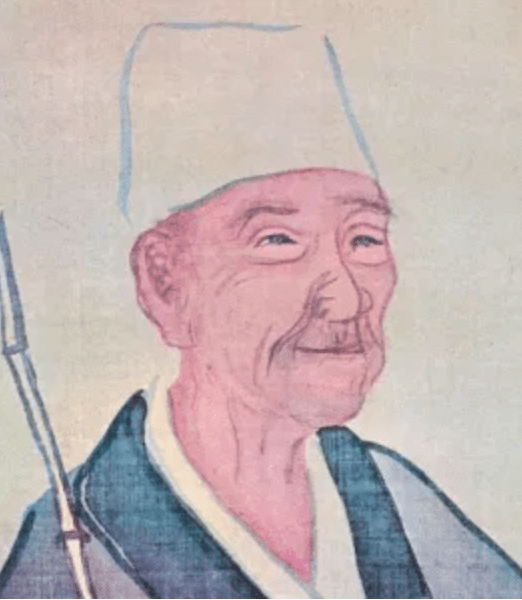
Biography: Issa Kobayashi (1763-1828), a renowned Japanese poet, was 54 years old when he wrote Oraga Haru (translated as The Year of My Life or My Spring) in 1816. This acclaimed book of prose and haiku captures a year of profound personal loss, including the death of his first-born son, set against the backdrop of his native village. Written in the late Edo period under the Tokugawa shogunate, it was a time of political stability on the surface but deepening hardship for ordinary people. Years of poor harvests and the aftermath of serious famines had left many peasants in poverty and insecurity, while rigid class structures kept social mobility low and pushed already struggling samurai and commoners into further distress. Economic strain, rural unrest, and the daily visibility of suffering would have surrounded Issa as he mourned his own family tragedies, helping to shape the somber, world-weary tone and acute awareness of human pain that run through his work from this period.
A Passage from Issa’s Oraga Haru (The Spring of My Life)
Still clothed in the dust of this suffering world, I celebrate the first day in my own way. And yet I am like the priest, for I too shun trite popular seasonal congratulations. The commonplace “crane” and “tortoise” echo like empty words, like the actors who come begging on New Year’s Eve with empty wishes for prosperity. The customary New Year pine will not stand beside my door. I won’t even sweep my dusty house, living as I do in a tiny hermitage constantly threatening to collapse under harsh north winds. I leave it all to Buddha, as in the ancient story.
The way ahead may be dangerous, steep as snowy trails winding through high mountains. Nevertheless I welcome the New Year just as I am.
New Year greeting-time:
I feel about average
welcoming my spring
And although she was born only last May, I gave my little daughter a bowl of soup and a whole rice cake for New Year’s breakfast, saying:
Laughing, crawling, you’re
exploring — already two
years old this morning
No servant to draw wakamizu, New Year’s “first water.”
But look: Deputy
Crow arrives to enjoy
the first New Year’s bath
Relating to and Understanding the Cultural and Historical Illusiong in the passage:
David Lanoue, an Issa scholar, stated that Issa’s writing is “unpretentious, blunt, non-censoring and, often, tongue-in-cheek.” This is apt when applied to the passage from Oraga Haru..
Relating on a Personal Level
Having recently become a new grandfather, I can relate to his delight with young daughter. I also related to Issa’s thoughts and feelings about the holiday season (“I celebrate the first day in my own way“) and (“. . . like the actors who come begging on New Year’s Eve with empty wishes for prosperity. The customary New Year pine will not stand beside my door . . . “). Both passages provided a taste of the Japanese culture of his era. And they seem like statements we, or at least I, might make in reference to the commercialization of our holiday seasons in our 21st century world.
Exploring the deeper cultural and historical Levels
So, if we can understand Issa on this sort of personal level, do we need to dig deeper to fully appreciate his writing? The answer is “yes” and “no.” Yes, we can understand some of his message. No, there are deeper allusions in much of his writing and if we want to fully undersand his writing we need to examine the historical and cultural background. And non-Japanese readers, it’s unlikely we can do so with out a little help.
Issa Scholar Steven Carter makes this point with respect to earlier period hokku (the predecessor of haiku):
Does the many-layered allusive nature of … hokku mean that we cannot understand it without knowing … background circumstances, allusions, and so forth? The answer is, of course, no. Like all texts, hokku survive the demise of the events that produced them, taking on a different life. Carter goes on to indicate what can be gained by deeper exploration of context:
What the exercise of exploring the rhetorical complexity of poems … does teach us … is that hokku when they were first composed, were seldom straightforward poems of natural description, even when they may easily be understood that way which was usually true for later haiku as well.
The passage I selected comes early in Oraga Haru and is more or less an introduction. It has a focus on Issa’s feelings about New Year’s celebrations, observations of his daughter, comments about his poverty and preparation for a forthcoming journey, a spiritual quest, which forms the basis for his full travel journal.
Initially, Issa states his feelings about the falseness and materialism of Japanese holidays:
… I am like the priest, for I too shun trite popular seasonal congratulations. The commonplace “crane” and “tortoise” echo like empty words, like the actors who come begging on New Year’s Eve with empty wishes for prosperity. The customary New Year pine will not stand beside my door. … (tr. Hamill)
As well as the commentaries that come with translations of the masters’ works, the Internet can be a rich source of contextual information. For example, the crane and tortoise are two of the longest lived animals and are used in greetings to express something akin to our own New Year’s toasts: “To a long life and happy new year.” (Miyokographix) With respect to the pine, many Japanese households … put up pine decorations known as “kadomatsu” on either side of entrances. The gods are said to descend from the heavens and dwell in the earthly realm for three days, after which time the decorations are burnt, releasing the spirits back to their realm. So Issa’s reluctance to put a pine beside his door is perhaps akin to me not putting a lit Christmas tree in my window and not having Christmas symbols on my lawn.
A second prose theme in Oraga Haru alludes to the difficulties of the path Issa has chosen:
My own way of celebrating the first of the year is somewhat different (than the priest’s), since the dust of the world still clings to me. . . . I live in a tiny cottage that might be swept away at any moment by a blast from the wild north wind. . . . I will leave all to Buddha, and though the path ahead be difficult and steep, like a snow-covered road winding through the mountains, I welcome the New Year—even as I am. (tr. Yuasa)
Again, context is important, but not essential. Issa isn’t clothed in dust simply because he’s travel worn. This passage serves as a preface to the start of his year-long travel as a spiritual journey. And some might suggest, is aimed at settling the dust always swirling in our minds.
New Year’s rituals in both Issa’s and our times lead to family gatherings and ritual celebrations. In the next passage, Issa shifts from his negative attitudes about the rituals to the joy of seeing his young daughter explore the world.
And although she was born only last May, I gave my little daughter a bowl of soup and a whole rice cake for New Year’s breakfast, saying:
Laughing, crawling, you’re
exploring — already two
years old this morning
(tr. Hamill)
Here again, context lends further understanding:
… the Japanese New Year (shogatsu ) is today the most significant holiday in Japan. . . . On Japanese New Year’s Day, the family starts the New Year with a ” breakfast of mochi” or rice cake … (Japan Today website, ibid.)
For us, the rice cake offered his daughter would be viewed as a sparse and inexpensive celebration treat. After all, our typical holiday banquets consist of abundant spreads of sumptuous foods and our problem is obesity, not near starvation. For the poor in Issa’s time, a rice cake would have been an expensive gift to a child too young to appreciate the sacrifice.
The passage may have simply been a joyful moment worth noting, but it may also serve as a metaphor for Issa’s wish that his forthcoming journey will be approached with the freshness of a child experiencing the early years on life’s path. Indeed, many of Issa’s haiku reflect the attitude that becoming child-like was a worthy aim:
turning into a child
on New Year’s Day…
I’d like that!
~ trans. Lanoue
David Lanoue explains: Issa’s decision to become a child again isn’t completely absurd, for it is his mission as a haiku poet to see the world with open, nonjudgmental, child-like eyes. Too many adults, in their daily rush, hurry past Nature’s treasures without paying attention to them, without really seeing them. This year, Issa vows to do otherwise. (Lanoue, The Haiku Guy Website)
Another contextual issue that might be considered is that a Japanese reader knowing about Issa’s life and particularly about the death of his daughter mentioned in the passage is likely to respond to the passage with more compassion than an uninformed western reader would.
The last passage and the third haiku takes us into Issa’s thoughts about transcendence through humor:
No servant to draw wakamizu, New Year’s “first water.”
But look: Deputy
Crow arrives to enjoy
the first New Year’s bath
(tr. Hamill):
Wakamizu, or the first water drawn on the morning of New Year’s Day, is believed to have the magical power to maintain health and prolong life. It is practiced today with ritualistic splendor. (see the Ryukyu Gallery website for images and commentary).
Given this, my reading of the passage is that Issa is sharing his delight in watching the crow enjoy a bath in a rain puddle and perhaps at the same time spoofing yet another of the many formal rituals of his time. Crows figure prominently in Issa’s haiku. In my present culture, the crow is considered by many to be a noisy, invasive pest, and in a mythical or superstitious sense, a harbinger of bad news or even death. However, in Issa’s era the crow may have been seen in a more positive light. In China and Japan, for example, the crow has a positive mythology: three-legged crow lives in the heart of the sun and his three legs represent the morning, afternoon, and evening. And Issa with his focus on creatures is likely to have had a positive view of crows as the social, intelligent and playful, yet noisy nuisances that they are. Here’s an example:
crow and nightingale
pass through it too…
purification hoop
(tr. Lanoue)
This seemingly lackluster haiku is better understood with Lanoue’s context:
This haiku refers to a hoop made out of miscanthus reed, used for a summer purification ritual. If one passes through it, one is protected from infectious diseases. In this haiku, both a crow and a nightingale pass through, suggesting that the hoop welcomes both commoners (crows) and nobility (nightingales). (Lanoue)
Summing Up
Even without the various pieces contextual information presented above, contemporary readers will readily understand Issa’s reactions to New Year’s celebrations and identify with his love of his daughter expressed at the delight of her at play.
While I have curmudgeonly attitudes about our Christmas celebrations, their materialism, falseness and lack of focus on Christian charity, I’ve always treasured the family gatherings. I was enchanted, for example, when my young daughters, dressed as elves, delivered the gifts handed to them by my father-in-law, dressed as Santa. I’m fairly certain that the girls had been psychologically transformed into elves during this family ceremony. On the other hand, a greeting card from my auto dealer or dentist leaves me cold.
With respect to Issa’s focus on human suffering, we may as readers be able to intellectually understand Issa’s Buddhism with its focus on humanity’s suffering. But it’s unlikely that many of us in the relatively rich Western world will embrace the idea of his intended journey as a traveler who will suffer severe privations as a remedy for the world’s suffering. Nor do many in the west believe that such a journey would lead to personal salvation.
One of Issa’ haiku that provides his feelings about the suffering Issa witnessed during his lifetime is and about the indifference of those better off is:
in our world,
we walk on the roof of hell,
gazing at flowers
– Issa (trans. Robert Hass)
The haiku is an apt depiction of western readers who are likely to understand such wholesale suffering only from a distance. One has only to be tuned into today’s (bad) news to know that the Four Horsemen have been particularly active in our lifetimes. But our suffering is more in the form of guilt at the plight of the poor in our own countrys and of third world peoples. Yes, we contribute funds, encourage foreign aid, adopt children, sponsor various development missions, build schools, send medical teams, contribute to food banks. But for the most part, feeling hopeless, we ignore the situation elsewhere as best we can and go on ginkos and sniff the flowers.
Conclusion:
To summarize, to an extent, Issa’s haibun can be understood and identified with on personal level even across the gaps of several centuries. However, even this brief exploration into context has helped me to understand Issa’s particular circumstances which informs his prose and haiku.
Notes: The translation of The Spring of My Life: And Selected Haiku by Kobayashi Issa (Author), Sam Hamill (Translator) Format: Kindle or Hardcover edition can be purchases on Amazon.com.
About Issa’s and Basho’s travel journals.
In preparing this essay on Issa’s journal I noticed how different Issa’s style and structure is to Basho’s. I corresponded on this issue with Jeffrey Woodward, founder/editor of Haibun Today, and he offered the following in an email correspondence:
Basho situates his own book within the travel genre; its organization therefore follows his itinerary which, as Japanese literary tradition would have it, is centered around “poetic places,” spots made famous by poems written over the generations. These poetic places offer a chronological sequence in his visitation and allusion (based on the poems previously composed about them).
The very absence of any such convention in the UK or North America, of poetic places with conventional associations based upon the poems composed there, is one reason that travel haibun in English are so often impoverished.
The structure of Issa’sOraga Haru doesn’t have an itinerary, as his intended pilgrimage is comically cut short by his own homesickness, and so, at a first glance, his haibun seem to be a tissue of anecdotes, some concerning himself, others concerning memorable characters such as the New Year’s priest, the gardener with his false paper peonies, etc.
You cannot look at Basho for parallels but must turn, therefore, to Sei Shōnagon’s Pillow Book, Kamo no Chōmei’s An Account of a Ten-Foot-Square Hut and Yoshida Kenkō’s Essays in Idleness.
While Issa presents what superficially appear to be many disconnected anecdotes, the anecdotes, observations and poems are like so many beads quietly joined by unifying threads (motifs) such as his daughter’s death and his general reflections upon mutability, his impoverished status and his willingness to “leave it all to the Buddha.” The repetition of major motifs, with variations, is what makes the chaotic surface phenomena cohere at the deeper level.