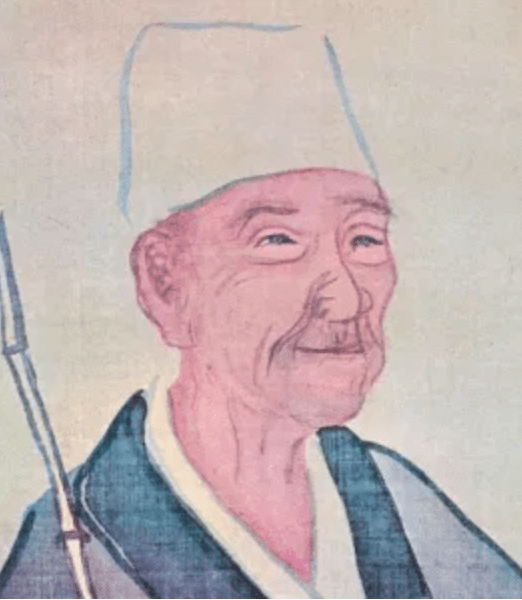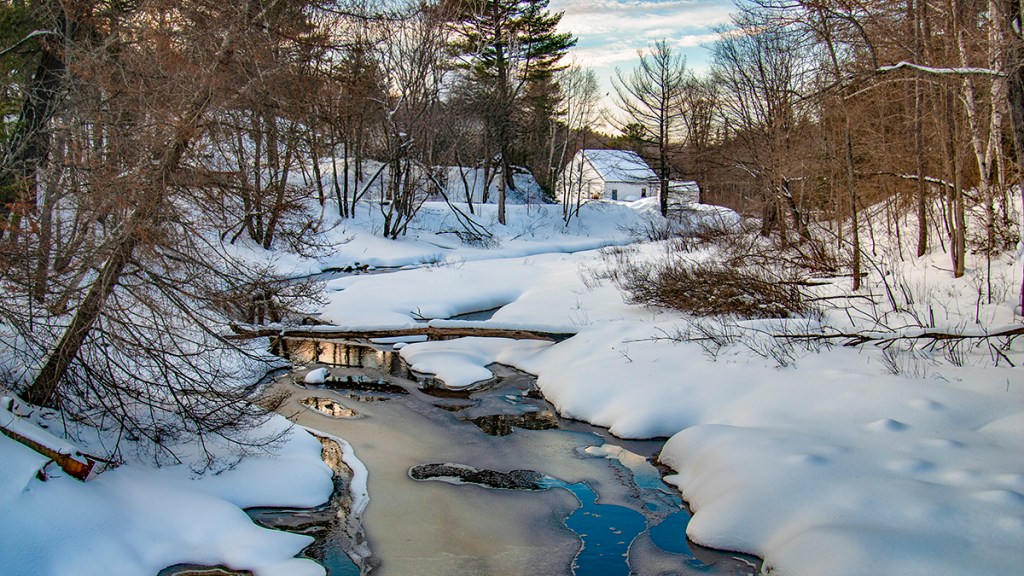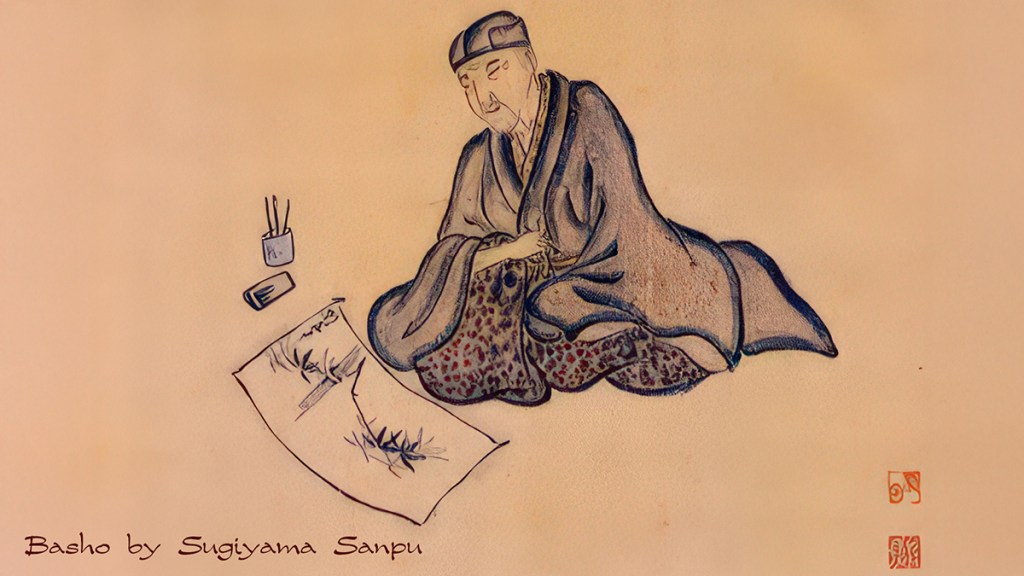
Issa and I have resided in this remote Ontario cabin for a month now. He speaks to me through his writing and accompanies me on my walks. I speak to him by writing about his poetry. Today, heโs lecturing me on compassion:
donโt worry spiders I keep house casually ~ Issa
So instead of engaging in my usual spider mayhem by employing the broom as a weapon of web destruction, I try to keep spidy and friends at a comfortable distance as I write this haibun and commentary based on an excerpt from Issaโs travel journal, Oraga Haru.
Finished writing for the day, I don snowshoes for a walk. The wildlife tracks are numerous: fox, deer, coyote, porcupine, rabbit, squirrel, endearing tiny tracks, and for the first time in a long while, wild turkey . . . and I wonder how a wild turkey would taste . . .
donโt worry turkeys I hunt quite ineptly ~ ray rasmussen (after Issa)
Back in the cabin, the radio informs me about the corona virus pandemic. And Issa shares some of the angst of his era โฆ
in this world we walk on the roof of hell, gazing at flowers ~ Issa
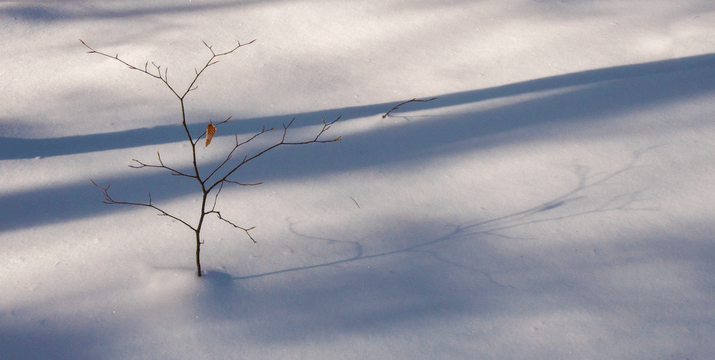
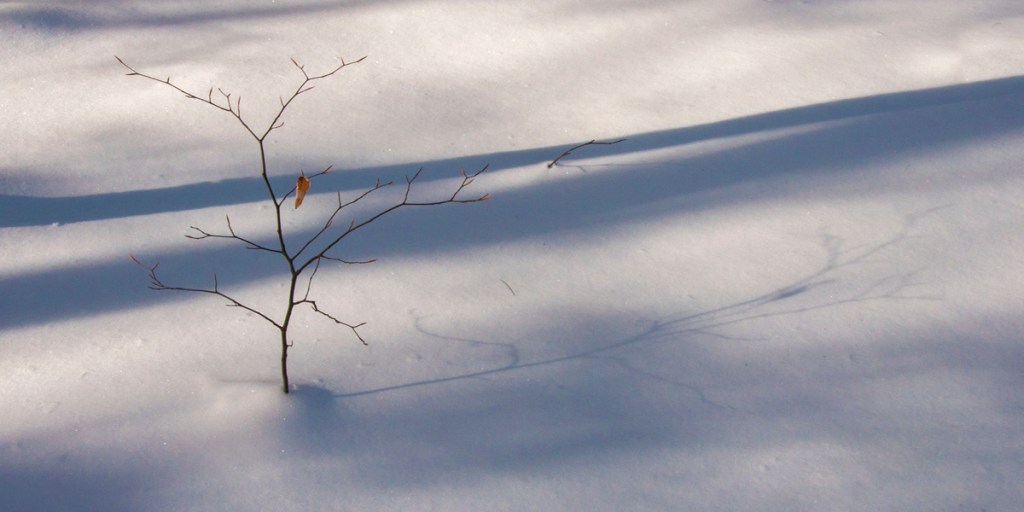
It’s winter, Issa, no flowers here. Will this leaf hanging from a small shrub do? Today Iโm capturing images of the bluish tree shadows cast by the setting sun. I can’t help but feel remiss in my compassion for humanity while enjoying winter’s sublime beauty.
in this world, a virus plagues our minds, gazing at tree shadows ~ ray rasmussen (after Issa)
I look out at the maple, ash and oak trees, all stripped of their leaves, and see myself, self-isolated, stripped of friends and obligations, and yet some weathered leaves have remained through winter on the beech trees, just as warm memories of friends and family have remained in my heart while away.
And so Issa shows me a way through adversity:
what good luck! bitten by this yearโs mosquitoes too ~ Issa
Thank you, Issa mentor-friend . . .
what good luck! yet another day refreshed by frigid winds ~ ray rasmussen (after Issa)
~ end ~
Notes
The haiku by Issa are translations by Robert Hass. My 3-line poems are modelled on Issa’s.
The commentary on Issaโs haibun that I referenced in the haibun above appears as a feature in A Hundred Gourds 3:3 June 2014.
Below is an excerpt (with a few modifications) about the life of Kobayashi Issa taken from David G. Lanoue’s Haiku Guy website. If you’d like to know more about the poet that many Japanese think of as their favourite haiku master or peruse many of Lanoue’s translations of Issa’s haiku, the Haiku Guy website is the place to visit.
Koybayashi Issa (1763-1828) practiced the art of haiku (then called haikai) as he wandered the length and breadth of Japan. Though his real name was Kobayashi Yatarรด, he chose Issa (Cup-of-Tea) as his haiku name. He also referenced himself as “Shinano Province’s Chief Beggar” and “Priest Cup-of-Tea of Haiku Temple.” His work was imbued with Buddhist themes: sin, grace, trusting in Amida Buddha, reincarnation, transience, compassion, and the joyful celebration of the ordinary. ~ David G. Lanoue (statement modified a bit by Ray Rasmussen)
“Hiraizumi” is one of about 40 prose passages in Matsuo Bashล’s classic travel journal, Oku no Hosomichi (The Narrow Road to the Deep North). Some, like “Hiarizumi” are accompanied by haiku, others not. Basho was weeks into a journey into Japanโs northern interior. He arrived at Hiraizumi, once home of the Fujiwara clan. Fujiwara no Hidehira c. 1122-1187) was the third ruler of the Fujiwara clan. He sheltered the samurai Minamoto no Yoshitsune, who fell out of favor with his brother Minamoto no Yoritomo. In 1187, the ruler Hidehira died, but not before exacting a promise from his son to continue to shelter Yoshitsune. 1189, Yoshitsune’s brother Yoritiomo surrounded the Fujiwara castle with his troops. Yoshitsune committed seppuku and Yoritomo destroyed the castle, killing Hidehiraโs son, ending, as Basho says, โthree glorious generationsโ of brave warriors.
Hiraizumi: A Haibun by Matsuo Basho
It was here that the glory of three generations of the Fujiwara family passed away like a snatch of empty dream. The ruins of the main gate greeted my eyes a mile before I came upon Lord Hidehira’s mansion, which had been utterly reduced to rice-paddies. Mount Kinkei alone retained its original shape.
As I climbed one of the foothills called Takadate, where Lord Yoshitsune met his death, I saw the River Kitakami running through the plains of Nambu in its full force, and its tributary, Koromogawa, winding along the site of the Izumigashiro castle and pouring into the big river directly below my eyes.
The ruined house of Lord Yasuhira was located to the north of the barrier-gate of Koromogaseki, thus blocking the entrance from the Nambu area and forming a protection against barbarous intruders from the north. Indeed, many a feat of chivalrous valor was repeated here during the short span of the three generations, but both the actors and the deeds have long been dead and passed into oblivion.
When a country is defeated, there remain only mountains and rivers, and on a ruined castle in spring only grasses thrive.
I sat down on my hat and wept bitterly till I almost forgot time.
summer grasses all that remains of soldiers’ dreams
Introduction: The Hut of the Phantom Dwelling , which Basho rewrote a number of times in 1690, is considered the first outstanding example of haibun literature. Earlier haibun tended to be extremely short and to function primarily as salutations. But The Phantom Dwelling , which was closely modeled on Kamo no Chomeiโs prose essay “Ten-Foot Square Hut” ( Hojoki , 1212), is an extended prose poem in a highly elliptical, hybrid style of vernacular, classical Japanese and classical Chinese, with Chinese-style parallel words and parallel phrases.
The Hut of the Phantom Dwelling Matsuo Basho, trans. Burton Watson
Beyond Ishiyama, with its back to Mount Iwama, is a hill called Kokubuyama โ the name, I think, derives from a kokubunji, or government temple of long ago. If you cross the narrow stream that runs at the foot and climb the slope for three turnings of the road, some two hundred paces each, you come to a shrine of the god Hachiman. The object of worship is a statue of the Buddha Amida. This is the sort of thing that is greatly abhorred by the Yuiitsu school, though I regard it as admirable that, as the Ryobu assert, the buddhas should dim their lights and mingle with the dust in order to benefit the world
Ordinarily, few worshipers visit the shrine, and itโs very solemn and still Beside it is an abandoned hut with a rush door Brambles and bamboo grass overgrow the eaves; the roof leaks; the plaster has fallen from the walls; and foxes and badgers make their den there. It is called the Genjuan, or Hut of the Phantom Dwelling. The owner was a monk, an uncle of the warrior Suganuma Kyokusui. It has been eight years since he lived there โ nothing remains of him now but his name, Elder of the Phantom Dwelling.
I, too, gave up city life some ten years ago, and now Iโm approaching fifty Iโm like a bagworm thatโs lost its bag, a snail without its shell Iโve tanned my face in the hot sun of Kisagata in Dewa and bruised my heels on the rough beaches of the northern sea, where tall dunes make walking so hard.
And now this year here I am drifting by the waves of Lake Biwa. The grebe attaches its floating nest to a single strand of reed to keep it from washing away in the current. With a similar thought, I mended the thatch on the eaves of the hut, patched up the gaps in the fence, and, at the beginning of the Fourth Month, the first month of summer, moved in for what I thought would be no more than a brief stay. Now, though, Iโm beginning to wonder if Iโll ever want to leave.
Spring is over, but I can tell it hasnโt gone for long. Azaleas continue to bloom, wild wisteria hangs from the pine trees, and a cuckoo now and then passes by I even have greetings from the jays and woodpeckers that peck at things, but I really donโt mind โ in fact, I rather enjoy them. I feel as though my spirit had raced off to China to view the scenery in Wu or Chu, as though I were standing beside the lovely Xiao and Xiang Rivers or Lake Dongting. The mountain rises behind me to the southwest, and the nearest houses are a good distance away.
Fragrant southern breezes blow down from the mountaintops, and north winds, dampened by the lake, are cool I have Mount Hie and the tall peak of Hira, and this side of them the pines of Karasaki veiled in mist, as well as a castle, a bridge, and boats fishing on the lake. I hear the voice of the woodsman making his way to Kasatori, and the songs of the seedling planters in the little rice paddies at the foot of the hill Fireflies weave through the air in the dusk of evening, clapper rails tap out their notes โ thereโs surely no lack of beautiful scenes.
Among them is Mikamiyama, which is shaped rather like Mount Fuji and reminds me of my old house in Musashino, while Mount Tanakami sets me to counting all the poets of ancient times who are associated with it. Other mountains include Bamboo Grass Crest, Thousand Yard Summit, and Skirt Waist. Thereโs Black Ford village, where the foliage is so dense and dark, and the men tend their fish weirs, looking exactly as theyโre described in the Manโyoshu .
In order to get a better view all around, Iโve climbed up the height behind my hut, rigged a platform among the pines, and furnished it with a round straw mat I call it Monkeyโs Perch. Iโm not in a class with those Chinese eccentrics Xu Juan, who made himself a nest in a crab apple tree where he could do his drinking, or Old Man Wang, who built his retreat on Secretary Peak. Iโm just a mountain dweller, sleepy by nature, who has returned his footsteps to the steep slopes and sits here in the empty hills catching lice and smashing them.
Sometimes when Iโm in an energetic mood, I draw clear water from the valley and cook myself a meal. I have only the drip, drip of the spring to relieve my loneliness, but with my one little stove, things are anything but cluttered. The man who lived here before was truly lofty in mind and did not bother with any elaborate construction. Besides the one room where the Buddha image is kept, there is only a little place designed to store bedding.
An eminent monk of Mount Kora in Tsukushi, the son of a certain Kai of the Kamo Shrine, recently journeyed to Kyoto, and I got someone to ask him if he would write a plaque for me. He readily agreed, dipped his brush, and wrote the three characters Gen-ju-an . He sent me the plaque, and I keep it as a memorial of my grass hut.
Mountain home, travelerโs rest โ call it what you will, itโs hardly the kind of place where you need any great store of belongings. A cypress-bark hat from Kiso, a sedge rain-cape from Koshi โ thatโs all that hangs on the post above my pillow.
In the daytime, Iโm once in a while diverted by people who stop to visit. The old man who takes care of the shrine or the men from the village come and tell me about the wild boar thatโs been eating the rice plants, the rabbits that are getting at the bean patches, tales of farm matters that are all quite new to me.
And when the sun has begun to sink behind the rim of the hills, I sit quietly in the evening waiting for the moon so I may have a shadow for company or light a lamp and discuss right and wrong with my silhouette.
But when all has been said, I am not really the kind who is so completely enamored of solitude that he must hide every trace of himself away in the mountains and wilds. Itโs just that, troubled by frequent illness and weary of dealing with people, Iโve come to dislike society.
Again and again I think of the mistakes Iโve made in my clumsiness over the years. There was a time when I envied those who had government offices or impressive domains, and on another occasion I considered entering the precincts of the Buddha and the teaching room of the patriarchs.
Instead, Iโve worn out my body in journeys that were as aimless as the winds and clouds and expended my feelings on flowers and birds. But somehow Iโve been able to make a living this way, and so in the end, unskilled and untalented as I am, I give myself wholly to this one concern, poetry.
Bo Juyi worked so hard at it that he almost ruined his five vital organs, and Du Fu grew lean and emaciated because of it. As far as intelligence or the quality of our writings goes, I can never compare with such men.
And yet in the end, we all live, do we not, in a phantom dwelling?
But enough of that โ Iโm off to bed.
Among these summer trees, a pasania โ something to count on.
Author of original:ย Matsuo Basho, Translation:ย Burton Watson (1925-2017)
“Haraizumi” is single passage (aka chapter/haibun) from Basho’s The Narrow Road to the Deep North (Ono no Hosomichi)
“Poetry is the revelation of a feeling that the poet believes to be interior and personal which the reader recognizes as his own.” ~Salvatore Quasimodo
Part I: Commentary
Bashล’s travel journals are some of the earliest examples of haibun and prose passages in early Japanese literature. His journals are accounts of his late-in-life walking journeys through Japan. They are often cited as important reading for serious students of the form and for anyone who writes in the haiku and haibun genres. More generally, they are held up as good reading for anyone who enjoys prose passages mixed with haiku and who wants a glimpse of the spirit of a man who lived several centuries ago.
For this commentary, I’ve selected the passage “Hiraizumi” from The Narrow Road to the Deep North about the demise of the Fujiwara clan. I chose it because as Quasimodo suggests, Bashล expressed a feeling in this piece that I recognized as my own in my recent travels in the Southwest United States. You may wish to read “Hiraizumi” prior to reading this commentary. If so, go here to open a second window.
There are several keys to understanding Bashล’s success in establishing haibun as a serious form of Japanese literature. The first is amount and level of descriptive detail โ what might be called ‘reportage’ โ that provides a context for the poetry that accompanies it. Examples include:
“The ruins of the main gate greeted my eyes a mile before I came upon Lord Hidehira’s mansion, which had been utterly reduced to rice-paddies…”
“The ruined house of Lord Yasuhira was located to the north of the barrier-gate of Koromogaseki, thus blocking the entrance from the Nambu area and forming a protection against barbarous intruders from the north.”
Of course, descriptive detail without some measure of lyrical phrasing would be monotonous. Lyrical passages that touched me included:
“It was here that the glory of three generations of the Fujiwara family passed away like a snatch of empty dream,”
“When a country is defeated, there remain only mountains and rivers, and on a ruined castle in spring only grasses thrive.”
And haibun prose allows a third key element โ some telling as well as showing:
“I sat down on my hat and wept bitterly till I almost forgot time.”
A fourth element is Bashล’s closing haiku which can be viewed both as a succinct summary of his feelings, but also as a more general poetic expression about that most serious human foible called ‘war.’ As with many of the haiku in Narrow Road his haiku step out to a new level of insight and lyricism:
summer grasses all that remains of soldiers’ dreams
~ Bashล (trans. L. Stryk)
Putting it all together, what is haibun according to Bashล?
โข Rich descriptive detail that sets the stage โข Poetic phrasings that stir the reader โข A modest amount of showing as opposed to telling โข A haiku that steps out from the prose and takes us to a new level of feeling and insight โข An overall succinctness that allows us to enter and leave a scene in a short reading
While these are the nuts and bolts of haibun, they don’t explain the whole. Haibun is a form of storytelling and these nuts and bolts have to be put together in a way that captivates the reader. As such, haibun prose goes well beyond a typical account of an outing which as Cobb has put it “is often as disorganized and unrooted in thematic content as a set of holiday snaps.”1 Haibun also goes far deeper in its storyline theme than the “go here, see this, eat that, pay this much” type of travel writing that one finds in newspapers and magazines. Of course, good travel writing can also be literary. Nor is haibun mere journalism. As Cobb has put it, “I view the haibun writer as a literary artist, someone who has high regard for authenticity, but not afraid to bend facts when it suits, setting poetic truth above a factual narrative, and free to rearrange chronology.” Cobb further reports that according to Yuasa, Bashล, did indeed “take such liberty as to change the natural course of events, or even invent fictitious events.”
With his long term perspective on the English-language haibun scene, Ken Jones states that “The haibun has come a long way in recent years. Bald narrations of country walks, rendered in flat, deadpan prose, and enlivened only by their haiku (“diamonds in mud banks”) are now mercifully fewโthough still occasionally published.”2
Summing up, “Hiraizumi” is a good story with the key compositional elements of haibun to support it. Bashล’s piece takes the reader into the Japan of several centuries ago, into the cultural-historical sensibilities of its people, and into the poetic style of expression that he made famous and that instructs us today, as writers. It is an eloquent statement about the transient nature of our lives and the futility, yet omnipresence, of war.
Part II: A Personal Recognition
“Hiraizumi” brought to mind the ruins that I had recently come upon in one of southern Utah’s sandstone canyons. After hiking several hours, I had found a way down into a remote, seldom-visited place named “Slickhorn Canyon.” There I came unexpectedly on the ruins of ancients who have been given the name “Anasazi” by the Navajos who now occupy the nearby lands.
Some of the ruins looked as if they had been abandoned only yesterday; others were reduced to little more than piles of rubble. Still visible were the finger impressions made when the builders pressed mud as mortar in between the building stones. One spot of mud-mortar had an impression of a baby’s foot.
Bashล doesn’t tell us what led to the demise of the Fujiwara clan, but from the omnipresent wars of our last century and from the records of Japanese historians, we can readily infer the causes. And what about the Anasazi? They disappeared around 1100 AD. While there is neither a written nor an oral remembering of the Anasazi, research from the natural record, the ring thickness of sections of 1000 year old trees and the carbon dating of debris from the sites, tell us that they faced a 100 year drought. We can guess that skirmishes developed between those whose farms had failed and had thus become nomadic raiders and those who had managed to carry on (and sometimes had their farming efforts plundered).
I sat in the shade near one ruin that had handprints painted above the dwelling’s doorway. I could imagine men gathered after a fruitless hunt, women preparing the evening meal from the sparse pickings dictated by a prolonged drought and the children, hungry, perhaps dying of starvation. All about me were pot shards, the broken remains of generations.
Like Bashล, I felt a deep sadness for the plight of these ancient peoples.
Part III: A Conversation of Sorts with Bashล
After reading Bashล haibun, I decided to pen a haibun modeled on “Hiraizumi.” I wanted to explore the structure of his style while utilizing my own experiences in Slickhorn Canyon as context. Whether my piece succeeds or fails is of little importance. Writing it helped me to identify with Bashล’s journey through his Japan. And it reminded me that the plight of the Anasazi is one that has been repeated throughout our disaster- and war-inclined human history, that these ruins were not just interesting artifacts, but places where families and entire clans once lived and then disappeared.
After writing it, I felt as if I had had a deep conversation with a travelling monk who loved to write poetry.
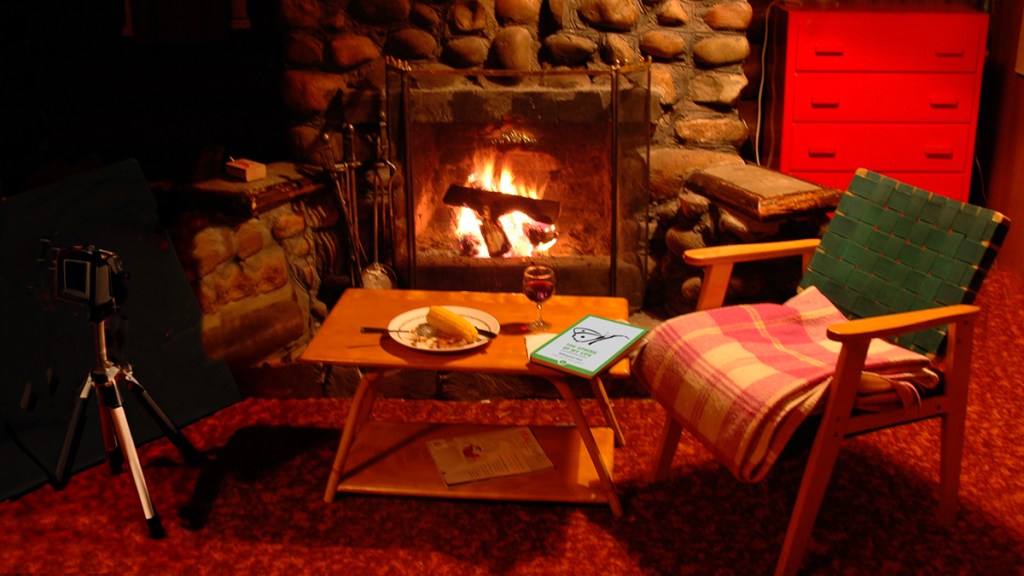
Iโve resided in a remote Ontario cottage for several weeks. Yesterday, a blizzard was blowing and so I stayed in and enjoyed conversing with Issa via the medium of his translators’ books. As I read and write notes, I notice a particularly ominous spider web and remember that Issa offers this haiku for consideration . . .
Don’t worry spiders I keep house casually ~ Issa
And instead of engaging in my usual spider mayhem by employing the broom as a weapon of web destruction, I keep my eye on the spider and move my desk a comfortable distance away while I continue to read Issaโs travel journal, Oraga Haru (The Spring of My Life).
Today the sun is out and I don snowshoes and come across numerous tracks: wild turkey, fox, deer, and porcupine . . . and, again, recalling Issa’s haiku, mentally compose derivatives. This is one I felt came close, since it closely replicates Issa’s, yet has my own context.
Don’t worry turkeys I hunt ineptly ~ after Issa
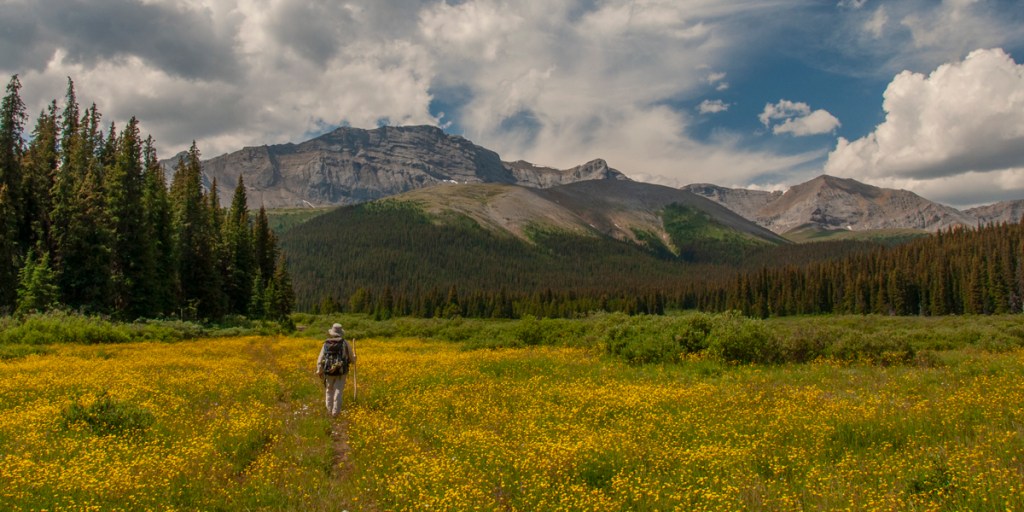
As Issa and I move through a mixed hardwood forest we come across a wildflower meadow, which brings to mind a walk last summer with Nancy, my partner, whom I’m missing.
Issa offers these thoughts on flower gazing . . .
We walk on the roof of hell, gazing at flowers ~ Issa
No wildflowers here in winter, Master Issa, but I’m taking photographs of the long blue-grey tree & shrub shadows cast by the setting sun. And yes, I agree, photographing scenes is akin to enjoying flowers while ignoring humankind’s woes. And, having confessed, I went about building my own version of Issa’s haiku.
We live in a world of chaos, while building snowmen ~ after Issa
On my last evening with Issa, I look out at the leafless trees, and think about how for a month Iโve shed routines, obligations, news reports and friends โ no phone or email here โ and felt the dual pains of loneliness and regrets.
And Issa, I know from the biographies of your life, you had many painful experineces to overcome, and I read that you offered your thoughts on transcendence:
What good luck! Bitten by This year’s mosquitoes too. ~ Issa
True enough, Issa, may I call you ‘friend’. Although bitter cold, this has been a good winter retreat for beauty, your companionship and contemplation of your sense of compassion and thoughts about transcendence.
What good luck! Chilled by This winter’s biting cold too. ~ after Issa
afterword:
I wrote this piece with the view in mind that it would do more for me to try to write haiku (and haibun for that matter) with Issa’s work as a model than to simply enjoy reading Issa’s work and leave it at that. While I like some of my derivative haiku above, I don’t like all of them. While I think Issa’s last haiku, for example, works, I don’t think my derivative is as accessible as is the irony in his. And, I’m pretty certain that if the editors of a haiku journal looked at my derivatives without having known about or ever seen any of Issa’s work, they’d not accept my three haiku derivatives as good enough to publish. But, after all, Issa wasn’t appreciated in his day by the other prominent haiku masters and pundits of his day.
What about haiku orthodoxy. If you scour the Internet for the ‘what is’ and ‘how to’ of haiku, a common pronouncement is that you mustn’t personify animals and inanimate objects. Did you notice that Issa is breaking that “rule”? He’s personifying spiders by speaking to them. His second haiku also breaks the “rules.” It’s more a philosophical musing than a focus on immediate images drawn from his environment. His third haiku is a clever bit of wit, what some would call a ‘ditty’ or ‘witticism.” And thus some editors will insist it’s a senryu, a haiku in form, but not a pure haiku … it’s more focused on humour and sentiment than the natural world.
Here’s a comparison of a haiku of mine that was published in Modern Haiku that used some of the same natural context, but that the editor accepted as focused on the natural world.
monkshood bloom โ the whine of mosquitoes seems diminished
Both mention mosquitoes, but Issa’s strikes me as a bit removed from nature and, again, more of a philosophical musing.
Isn’t derivative writing also a bad thing?
If you’re interested in this idea that you can expand your own writing repertoire by modelling the work of other writers (and acknowledging that you’ve done so), you might be interested in my article on the subject that appeared originally in Contemporary Haibun Online: The Role of Modelling in Haibun Composition.
notes:
The haibun was previously published in the A Hundred Gourds journal.
The haiku in italics are by Kobayashi Issa (Trans. Robert Hass).
If you enjoy Issa’s haiku, a website I often visit is David G. Lanoue’s “Haiku of Kabayashi Isssa.”
The two tranlations of Oraga Haru I read and relied on are: Sam Hamil, Kobayashi issa: The Spring of my Life and Selected Haiku; Nobuyuki Yuasa, The Year of My Life: A Translation of Issa’s Oraga Haru.
This post explores Du Fu’s poem “Day’s End” in terms of the key characteristics of contemporary English-language haibun composition. It also explores the value of modelling the work of writers whose poetry touches you as a way of expanding your writing repertoire.
Introduction
Some years ago, I was interested in expanding my reading from Japanese Masters (Basho and Issa) to Chinese Masters and somehow found my way to Du Fuโs poems. It was frustrating that it was so difficult to find the work of Du Fu and other Asian masters in online sources, particularly in light of Harvard professor Stephen Owenโs comment: “We have Dante, Shakespeare and Du Fu (712-770). These poets create the very values by which poetry is judged.” If Du Fu is so highly regarded by the worldโs literary scholars, why is it that the Chinese poet-sage Du Fu . . . an immortal in the East Asian cultural sphere, still remains largely unknown in the Western world, and particularly unknown by poetry enthusiasts?
I liked what I found in Du Fuโs writing. As with Basho and Issa, it warmed me to think I could relate to the experiences and poetic sensibilities of a person writing in 8th century China to my own experiences in 21st century Canada. Heโd communicated not just from another country, but across a gap 1300 years. Perhaps itโs because the joys and sorrows of the lived life, despite all our luxuries, hasnโt changed that much.
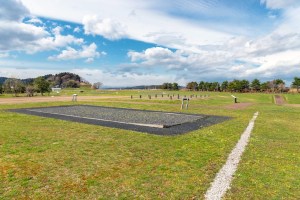
Field at present day Hiraizumi ruins site, Japan . . . all that remains of soldiers’ dreams.
Bashล’s travel journals, purportedly the earliest examples of haibun, are accounts of his late-in-life walking journeys through Japan. They are often cited as important reading for serious students of the form. More generally, they are held up as good reading for readers who enjoy poetic prose and who want a glimpse of the spirit of a man who lived several centuries ago.
For this commentary, I’ve selected the passage “Hiraizumi” from Basho’s The Narrow Road to the Deep North about the demise of the Fujiwara clan. The aim to to explore Basho’s use of haibun and haiku as an exemplar of Japan’s best known haiku and haibun master.
I’ve also added one of my published haibun as an example of a contemporary haibun composition.
courtesan and monk, we sleep under one roof together, moon in a field of clover ~ Basho
Outside, apple blossoms glow in the dusk. She lies on her side, head propped up on a pillow, her eyes telling me that something important is coming, my eyes taking in the candlelight falling on her breasts.
“I need to know more about you,” she says.
โDo you mean about me joking that I’m a monk?โ
“Yes, because right now you don’t seem very much like a monk.” She glances at my hand wandering slowly along the curve of her hip.
“You’re thinking about Christian monks, the ones who lived in dank cells, ate lentils and hard bread, the ones who whipped themselves. Think instead of Basho, the Japanese monk who traveled extensively, shared his poetry with peasants and samurai nobles, loved flowers, enjoyed the company of women, the warmth of taverns. Think more of a European troubadour with haiku as his song.”
I'm a wanderer
so let that be my nameโ
the first winter rain
~ Basho
“Does this mean that I’m just someone who happens to sleep with you?”
“No, but I’ve been a partner all of my life and for now I need not to be.โ
“So what am I?” she asks. “I don’t know how to tell my friends whatever it is we’re doing. It feels like more than dating or having sex and itโs not friendship because I donโt sleep with my friends.”
how reluctantly
the bee emerges from deep
within the peony
~ Basho
“Canโt we simply enjoy what we have,โ I reply.
“I’m reluctant to give up the feel of your skin against mine, but I’ll have to think about this.” She pecks a kiss, dresses and leaves.
A week later her note arrives: “I have such good memories of our moments together. It’s a gift to desire and be desired, but we need such different things.โ
winter seclusionโ
sitting propped against
the same worn post
~ Basho
~ end ~
Author’s comments:
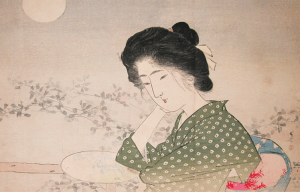
This haibun is my text intertwined with translations of Basho’s haiku and headed by Toshimine’s artwork. It was first published in the journal Simply Haiku.
I thought of this piece as a conversation with two Japanese artists: the haiku by Matsuo Basho, based on his work and poetic sensibilities while living as a traveling poet-monk in 17th century Japan and the woodblock print by “Moon and Bush Clover” by Tsutsui, Toshimine (1863-1934) which he painted on a fan.
Unless we’re Japanese scholars and/or citizens and/or zen practitioners or students of Japanese woodblock art, it’s unlikely we can understand the full illusions and sensibilities of Basho’s poetry and Toshimine’s artwork. Still, his words as translated speak to me and fit my sensibilities as a man growing up in 20th century North America, and in particular, one who found himself immersed in the “dating game” several years after a painful divorce. And there I was, once again, “in seclusion, sitting propped against the same worn post.” In case you’re worried, I’m fortunately paired up now with a wonderful gal who has a firm hold on my heart.
Notes:
All haiku are by Basho. The translations above were found at website titled “Bashoโ and cited R.H. Blyth, W.J. Higginson, J. Reichhold and Sam Hamill as translators of various haiku. “A Monk’s Journey” is haibun with a mix of my prose intertwined with translations of Basho’s haiku. It was first published in the journal Simply Haiku. I present it to show how writers can work in conversation, so to speak, with the Japanese masters and other contemporary poets. . . .