Day’s End: a Visit to Slickhorn Canyon

Here, in this remote, twisted canyon, countless generations of aboriginal puebloan peoples lived. One thousand years ago, they faced a 100-year drought, and lost out to it. It’s likely that some farmers became nomads, raiding the produce of others who had struggled on; likely there were skirmishes in which one family battled another for survival.

scattered pot shards
all that remains of a
nameless family

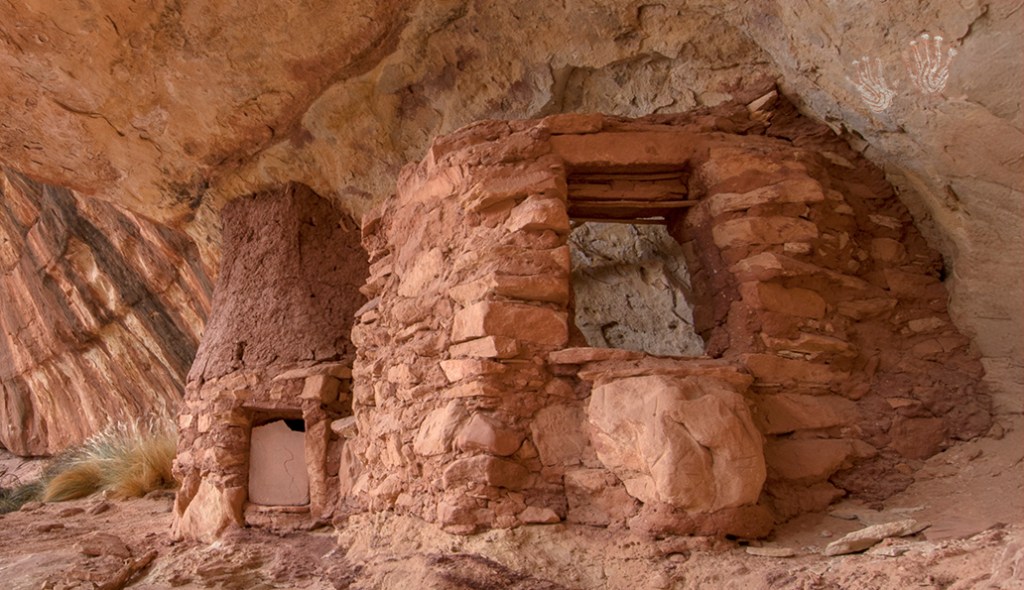
I rest in an alcove’s shade near crumbling walls of stone and mud located high on a sandstone cliff. Ghostlike handprints are painted above the doorway. Below is the wash whose intermittent waters fed their small plot. Where corn and squash once grew, there’s nothing but cactus.

I listen to the wind whispering, imagine it’s them speaking of their failing crops while sharing a scant evening meal.

I don’t know who these tears are for.

sheltering in
the broken walls
a whiptail lizard


Notes: Published in Haibun Today 5:4 December 2011

This haibun was inspired by the chinese poet Du Fu’s “Days End”. I used his simple structure and put in my on theme related to my visits to the (sometimes intact) ruins left by the ancestral puebloans of the four-corners region of the United States.

What Are You Up To?

The sunโ€™s rays filter through a stand of spruce where twenty horses are hitched. As we unpack them, Dave, a lanky outfitter, and I chat about the grizzly we spotted earlier in the day and how the horses are holding up.

menโ€™s talk โ€“
the smell of
sweat and manure

Dave asks, โ€œRay, what are you up to these days?โ€

I’m embarrassed to say that I receive a monthly check without having to work, that I no longer wake up by an alarm clock, that I feel guilty about those who have to rush breakfast and fight traffic, that I view my avocations as luxuries in a world stressed by war and poverty.

Finally, I say: โ€œWell, I write a bit and do some photography.โ€

Dave replies, โ€œOh, do you sell your photographs?โ€

 โ€œSome, but not enough to pay for the camera.โ€

So there it is. I canโ€™t simply sit on the back stoop and admire the lawn growing, the shadows lengthening.

โ€œWell,โ€ Dave grunts as he hefts a 60-pound load off the horse, โ€œmust be nice to have time to pursue your interests.โ€

How many times have I heard that I now have time to be the writer I always wanted to be, to travel as much as I want?

In younger times I was a jock, a professional, a dad, a leader and a teacher. Now I’m a retiree, a senior, a grey beard, all of which carry undertones of geezer, hints of useless.

The horses donโ€™t like being corralled, and I donโ€™t either. When we release them, they race out into the meadow, roll in the black loam, shake and begin to graze.

I wish this rawness I feel could as easily be shaken off.

monkshood bloom โ€“
the whine of mosquitoes
seems diminished

Note: Haiku first published in Modern Haiku. Haibun with haiku later published in Lynx Haiku Journal.