
If you want to learn about poetry — if you want to “access” it — what you need to do is find great poems you like, figure out which are worth rereading and then reread them.
~ Robert Pinsky
Pinsky goes on to suggest that you learn what they’re doing and bring what you’ve learned into your own writing.
Because haiku is so important a component of haibun, I often visit The Heron’s Nest haiku journal to see the Editors’ Choices and to read their comments on the poems they’ve selected. But I read the haiku first to form my own reactions and then read the editors’ comments.
In similar vein, as a means of improving your understanding of haibun and improving your composition skills, on occasion it’s worth the time to explore haibun commentaries on the work of contemporary exemplars and the Japanese Masters and doing deep, rather than doing quick, cursory readings.
Over time in this section, I’ll post haibun that I or others have selected along with comment on what makes them outstanding.
The purpose is to encourage writers, particularly those new to the haibun genre, to regularly engage in deep readings of haibun.
Commentary #1: Glenn Coats’ haibun “Witness”
Commentary #2: Japanese Master Matsuo Basho’s “Hiraizumi”
(Others to follow)
Notes:
Epigraph is from Robert Pinsky, Singing School: Learning to Write (and Read) Poetry by Studying With the Masters, WW Norton, WW Norton, July 29 2014. Pinsky is an American poet, essayist, literary critic, and translator. From 1997 to 2000, he served as Poet Laureate Consultant in Poetry to the Library of Congress. He is the author of nineteen books, most of which are collections of his poetry.
You may find it useful to read David Orr’s essay “Points of Entry” for more information about accessibility and why a good way to learn to write well is to do deep readings of the masters in your chosen genre.
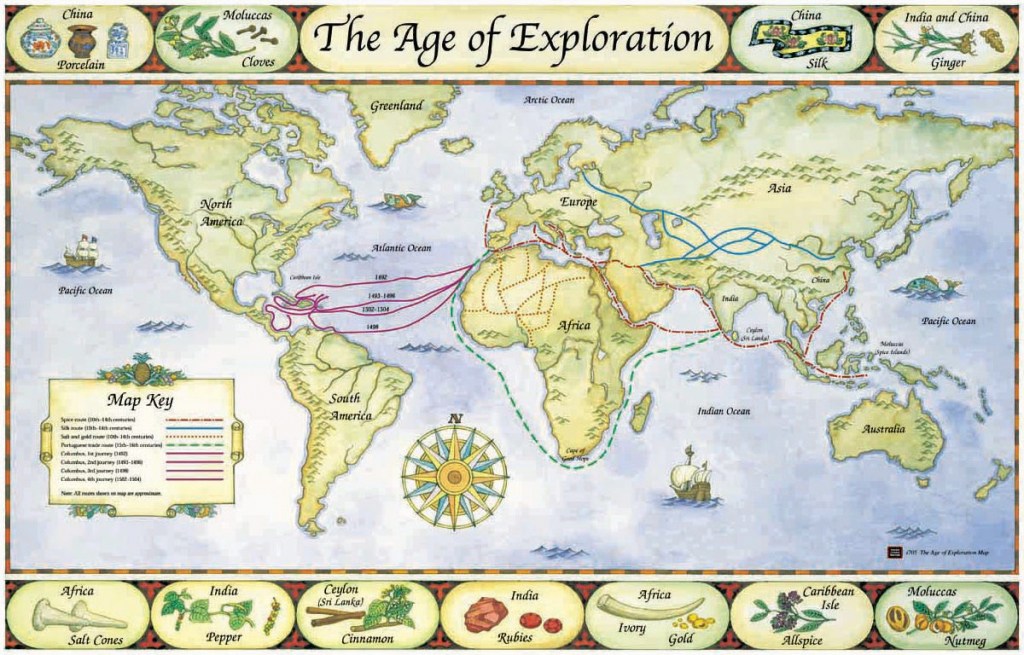
Age of Exploration Map taken from Slideshare.net.

 Ray Rasmussen: All Things Haibun Blog