Ray Rasmussen
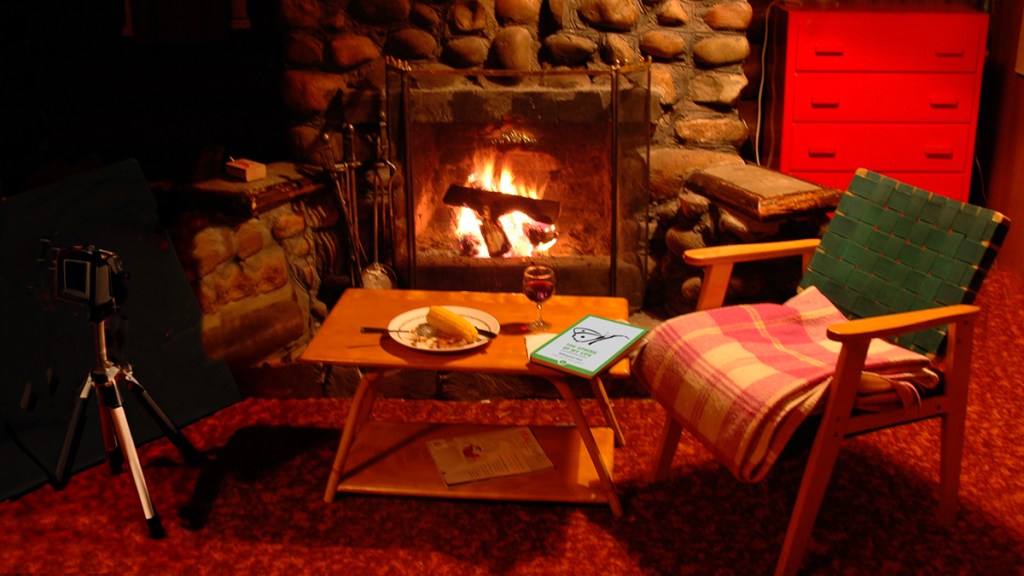
I’ve resided in a remote Ontario cottage for several weeks. Yesterday, a blizzard was blowing and so I stayed in and enjoyed conversing with Issa via the medium of his translators’ books. As I read and write notes, I notice a particularly ominous spider web and remember that Issa offers this haiku for consideration . . .
Don’t worry spiders
I keep house
casually
~ Issa
And instead of engaging in my usual spider mayhem by employing the broom as a weapon of web destruction, I keep my eye on the spider and move my desk a comfortable distance away while I continue to read Issa’s travel journal, Oraga Haru (The Spring of My Life).
Today the sun is out and I don snowshoes and come across numerous tracks: wild turkey, fox, deer, and porcupine . . . and, again, recalling Issa’s haiku, mentally compose derivatives. This is one I felt came close, since it closely replicates Issa’s, yet has my own context.
Don’t worry turkeys
I hunt
ineptly
~ after Issa
As Issa and I move through a mixed hardwood forest we come across a wildflower meadow, which brings to mind a walk last summer with Nancy, my partner, whom I’m missing.
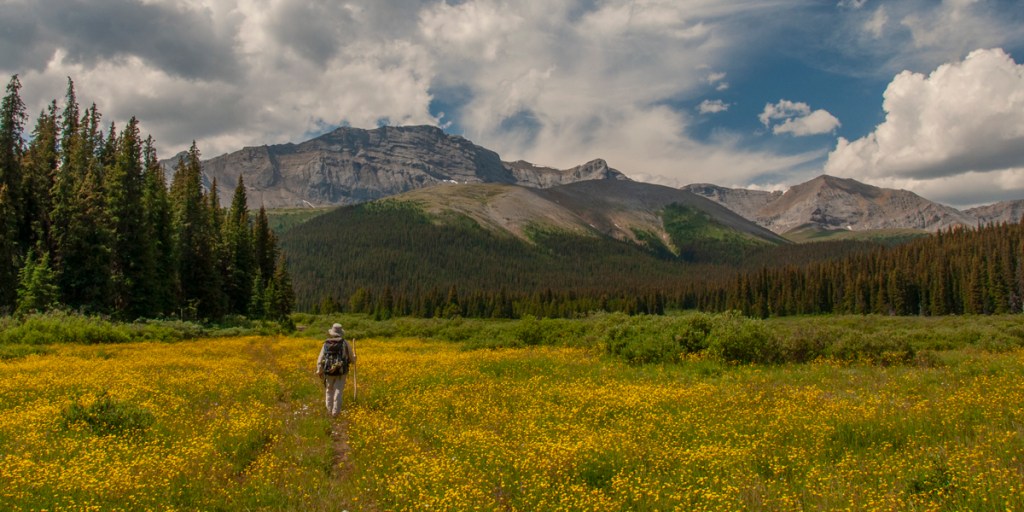
Issa offers these thoughts on flower gazing . . .
We walk on the roof of hell,
gazing at flowers
~ Issa
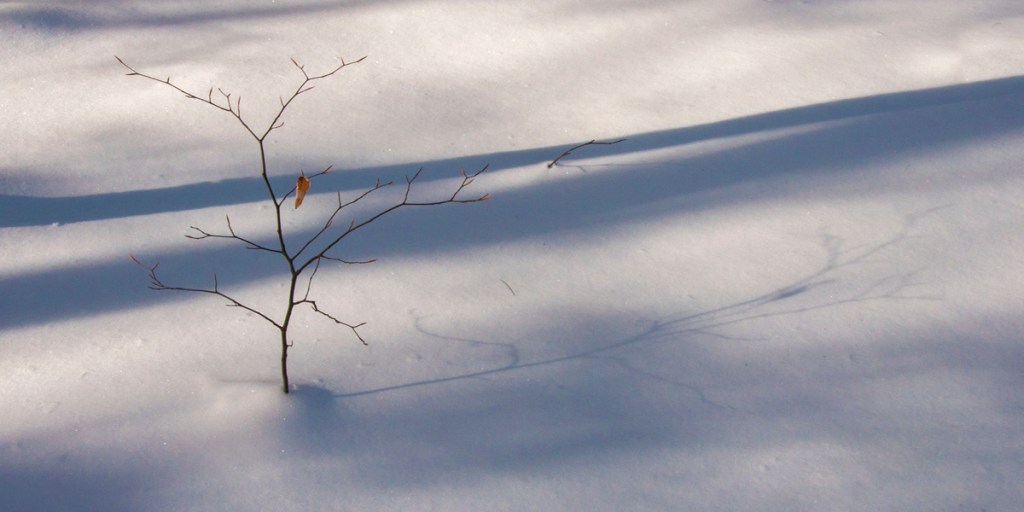
No wildflowers here in winter, Master Issa, but I’m taking photographs of the long blue-grey tree & shrub shadows cast by the setting sun. And yes, I agree, photographing scenes is akin to enjoying flowers while ignoring humankind’s woes. And, having confessed, I went about building my own version of Issa’s haiku.
We live in a world of chaos,
while building snowmen
~ after Issa
On my last evening with Issa, I look out at the leafless trees, and think about how for a month I’ve shed routines, obligations, news reports and friends – no phone or email here – and felt the dual pains of loneliness and regrets.
And Issa, I know from the biographies of your life, you had many painful experineces to overcome, and I read that you offered your thoughts on transcendence:
What good luck!
Bitten by
This year’s mosquitoes too.
~ Issa
True enough, Issa, may I call you ‘friend’. Although bitter cold, this has been a good winter retreat for beauty, your companionship and contemplation of your sense of compassion and thoughts about transcendence.
What good luck!
Chilled by
This winter’s biting cold too.
~ after Issa
afterword:
I wrote this piece with the view in mind that it would do more for me to try to write haiku (and haibun for that matter) with Issa’s work as a model than to simply enjoy reading Issa’s work and leave it at that. While I like some of my derivative haiku above, I don’t like all of them. While I think Issa’s last haiku, for example, works, I don’t think my derivative is as accessible as is the irony in his. And, I’m pretty certain that if the editors of a haiku journal looked at my derivatives without having known about or ever seen any of Issa’s work, they’d not accept my three haiku derivatives as good enough to publish. But, after all, Issa wasn’t appreciated in his day by the other prominent haiku masters and pundits of his day.
What about haiku orthodoxy. If you scour the Internet for the ‘what is’ and ‘how to’ of haiku, a common pronouncement is that you mustn’t personify animals and inanimate objects. Did you notice that Issa is breaking that “rule”? He’s personifying spiders by speaking to them. His second haiku also breaks the “rules.” It’s more a philosophical musing than a focus on immediate images drawn from his environment. His third haiku is a clever bit of wit, what some would call a ‘ditty’ or ‘witticism.” And thus some editors will insist it’s a senryu, a haiku in form, but not a pure haiku … it’s more focused on humour and sentiment than the natural world.
Here’s a comparison of a haiku of mine that was published in Modern Haiku that used some of the same natural context, but that the editor accepted as focused on the natural world.
monkshood bloom –
the whine of mosquitoes
seems diminished
Both mention mosquitoes, but Issa’s strikes me as a bit removed from nature and, again, more of a philosophical musing.
Isn’t derivative writing also a bad thing?
If you’re interested in this idea that you can expand your own writing repertoire by modelling the work of other writers (and acknowledging that you’ve done so), you might be interested in my article on the subject that appeared originally in Contemporary Haibun Online: The Role of Modelling in Haibun Composition.
notes:
The haibun was previously published in the A Hundred Gourds journal.
The haiku in italics are by Kobayashi Issa (Trans. Robert Hass).
If you enjoy Issa’s haiku, a website I often visit is David G. Lanoue’s “Haiku of Kabayashi Isssa.”
Read an excerpt from Issa’s haibun journal and commentaries on his style.
The two tranlations of Oraga Haru I read and relied on are: Sam Hamil, Kobayashi issa: The Spring of my Life and Selected Haiku; Nobuyuki Yuasa, The Year of My Life: A Translation of Issa’s Oraga Haru.
 Ray Rasmussen: All Things Haibun Blog